Top AI Red Teaming Tools for Securing ML Models in 2026
A roundup of leading AI red teaming tools used to probe, stress-test, and harden machine learning models against adversarial attacks, jailbreaks, and data leakage in 2026.
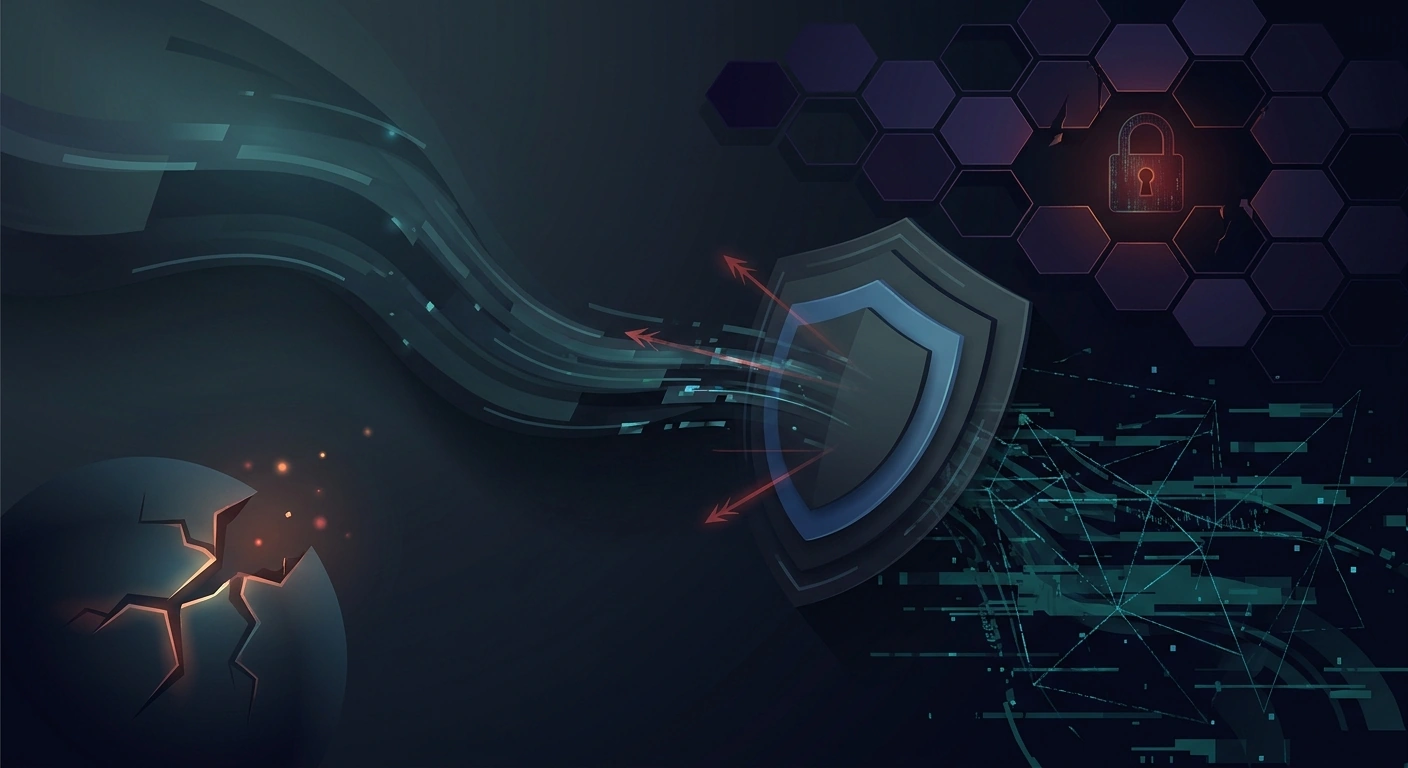
As generative AI systems move deeper into production — powering everything from synthetic video pipelines to enterprise copilots — the attack surface has expanded dramatically. Prompt injection, jailbreaks, training data extraction, model inversion, and adversarial perturbations are no longer theoretical. A new generation of AI red teaming tools has emerged to help security teams systematically probe models before attackers do. A recent roundup from MarkTechPost catalogs 19 of the most notable offerings in this space for 2026.
Why AI Red Teaming Matters
Traditional application security tools weren't built for probabilistic systems. Large language models, diffusion-based image and video generators, and multimodal agents fail in ways that static code scanners can't catch: they hallucinate, leak training data, bypass alignment guardrails under pressure, and amplify biases. Red teaming — the practice of simulating adversarial behavior against a system — has become the default methodology for uncovering these failure modes.
For teams working on synthetic media and deepfake detection in particular, red teaming is doubly important. Detection classifiers can be fooled by adversarial noise, generative models can be jailbroken into producing non-consensual imagery, and watermarking schemes can be stripped by determined attackers. Stress-testing these pipelines before deployment is now table stakes.
The Tooling Landscape
The list spans open-source frameworks, commercial platforms, and research toolkits. Several categories stand out:
Adversarial ML Frameworks
Tools like IBM's Adversarial Robustness Toolbox (ART), CleverHans, and Foolbox remain foundational. They implement canonical attack algorithms — FGSM, PGD, Carlini-Wagner, DeepFool — for evasion and poisoning attacks against classifiers. These are especially relevant for evaluating the robustness of deepfake detectors and content authenticity classifiers, which can often be broken with imperceptible perturbations.
LLM-Specific Red Teaming Platforms
Purpose-built LLM security tools have exploded. Garak, PyRIT (Microsoft's Python Risk Identification Toolkit), and Promptfoo automate prompt-injection campaigns, jailbreak discovery, and harmful-output elicitation. They ship with libraries of known attack patterns — DAN-style prompts, encoding-based bypasses, multi-turn social engineering — and score model responses against policy taxonomies.
Commercial entrants like Lakera Red, HiddenLayer, and Robust Intelligence offer continuous testing and runtime protection, positioning themselves as the "DAST for LLMs." These platforms tend to include dashboards, compliance mappings (NIST AI RMF, EU AI Act), and integrations with CI/CD pipelines.
Agentic and Multimodal Testing
As agents take actions in the real world — calling tools, browsing, executing code — the blast radius of a successful attack grows. Newer tools focus on indirect prompt injection through retrieved documents, tool-call manipulation, and multimodal attacks that hide instructions inside images or audio. This is directly relevant to video generation pipelines, where malicious prompts could be smuggled through reference frames or audio tracks.
Model Scanning and Supply Chain
Tools such as ModelScan and Protect AI's scanners inspect serialized model files (pickle, safetensors, ONNX) for malicious code — a real risk when downloading checkpoints from public hubs. Given how many deepfake and video generation workflows rely on community LoRAs and fine-tunes, model provenance scanning is no longer optional.
Technical Implications
The proliferation of red teaming tooling reflects a broader shift: AI security is becoming a distinct discipline with its own taxonomies (MITRE ATLAS, OWASP LLM Top 10) and its own tooling stack. For organizations building or deploying synthetic media systems, integrating these tools into development pipelines produces measurable benefits — reproducible attack benchmarks, regression testing against known jailbreaks, and documented evidence for regulators increasingly asking about pre-deployment risk assessments.
The overlap with deepfake defense is significant. The same adversarial techniques used to attack image classifiers are used to evade deepfake detectors. The same prompt-injection methods that jailbreak chatbots can coerce image and video models into generating restricted content. A robust red teaming program treats these as a unified problem rather than separate silos.
Choosing a Stack
For most teams, the pragmatic approach is layered: an open-source framework like ART or Garak for baseline coverage, a commercial platform for continuous monitoring and compliance reporting, and custom harnesses for domain-specific attacks — particularly for video and audio generation where off-the-shelf coverage remains thin. Expect this space to consolidate rapidly as enterprise AI governance requirements tighten through 2026.
Stay informed on AI video and digital authenticity. Follow Skrew AI News.