AI Distillation Explained: The Tech Behind the Controversy
Knowledge distillation lets smaller AI models inherit capabilities from larger ones. Here's how the technique works, why it matters for synthetic media models, and why it sits at the center of today's biggest AI controversies.
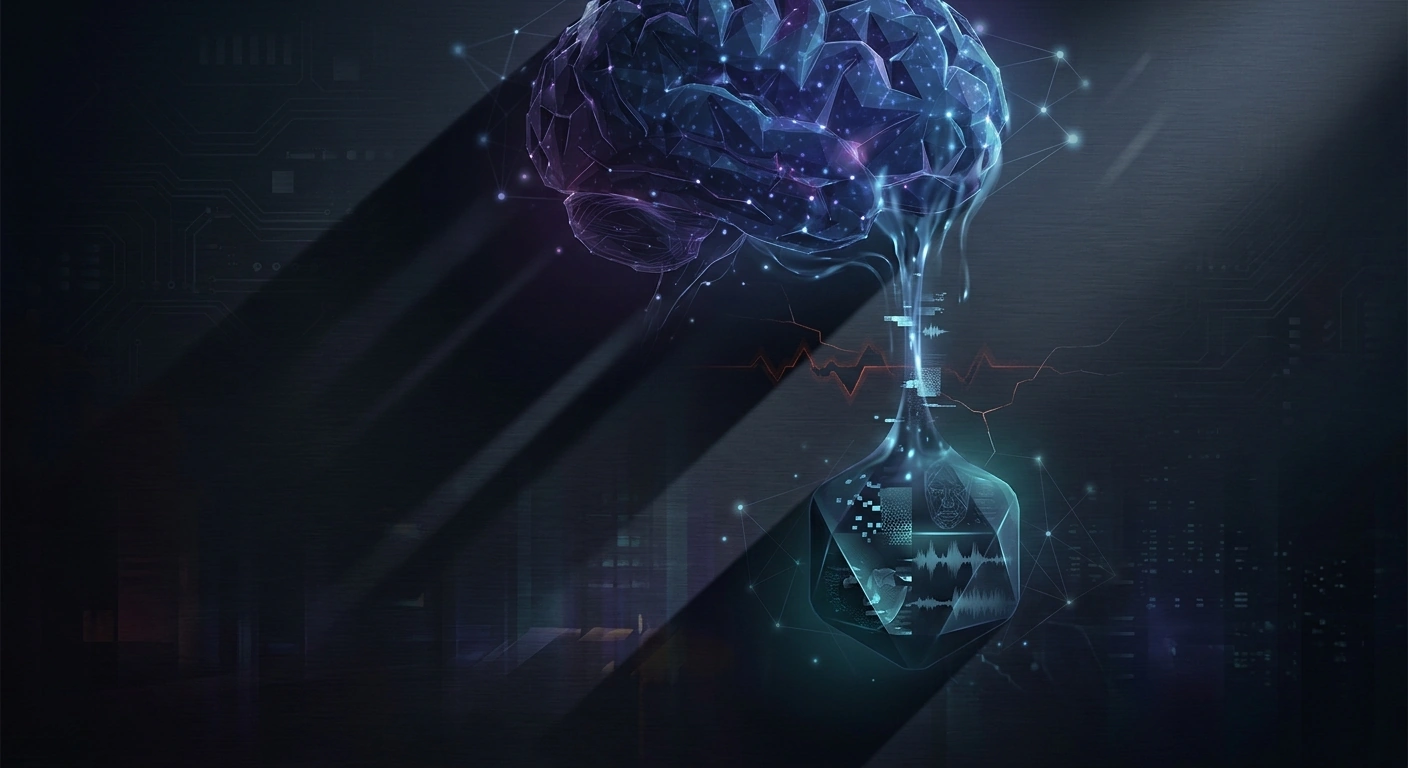
Knowledge distillation has exploded from an obscure machine learning technique into the center of one of the AI industry's biggest controversies. When OpenAI accused Chinese lab DeepSeek of allegedly distilling its models, it thrust a years-old research concept into boardroom discussions and regulatory debates. Understanding distillation is now essential for anyone tracking the economics and ethics of modern AI — including the generative video and synthetic media models shaping our space.
What Is Knowledge Distillation?
Knowledge distillation is a model compression technique introduced by Geoffrey Hinton, Oriol Vinyals, and Jeff Dean in their 2015 paper Distilling the Knowledge in a Neural Network. The core idea is elegant: a large, expensive "teacher" model transfers its learned behavior to a smaller, cheaper "student" model. Instead of training the student from scratch on raw labels, you train it to mimic the teacher's output distribution.
The key insight is that a teacher's soft probabilities carry more information than hard labels. If a teacher classifies an image as 85% cat, 10% dog, 5% fox, the student learns not just the correct answer but the relationships between classes — the so-called "dark knowledge" embedded in the teacher's logits. Temperature scaling is typically applied to soften those probabilities and expose more of this latent structure.
How It Works in Practice
A standard distillation pipeline has three ingredients:
- Teacher model: a large, pre-trained network (e.g., GPT-4-class LLM or a frontier diffusion model).
- Student model: a smaller architecture with far fewer parameters.
- Distillation loss: usually a weighted sum of KL divergence against the teacher's softened outputs and standard cross-entropy against ground truth.
Variants include response-based distillation (matching final outputs), feature-based distillation (matching intermediate hidden states), and relation-based distillation (matching relationships between layers or samples). For generative models, sequence-level distillation has a student mimic the teacher's generated sequences token by token.
Why Distillation Matters for Generative Media
Distillation isn't just a chatbot story — it's foundational to modern video and image generation. Techniques like progressive distillation and consistency distillation compress diffusion models that normally need 50+ sampling steps into fast students that generate images in 1–4 steps. This is how tools like SDXL Turbo, LCM-LoRA, and many real-time video generators achieve their speed. Without distillation, on-device deepfakes, real-time face swaps, and low-latency voice cloning would be economically impractical.
The same pattern shows up in audio: large teacher models like Whisper are distilled into compact students for edge deployment, while neural codec LLMs rely on distilled components to stay fast enough for streaming speech synthesis.
The Controversy: Where Data Comes From
The legal and ethical firestorm centers on black-box distillation: training a student using API outputs from a teacher you don't own. If a lab queries GPT-4 or Claude millions of times and uses those responses as training data for its own model, it can approximate frontier capabilities at a fraction of the cost — often in violation of provider terms of service.
This is qualitatively different from classical distillation, where labs distill their own internal models. The DeepSeek controversy highlighted how difficult it is to prove distillation occurred after the fact. Output similarity isn't sufficient evidence — models trained on overlapping internet data naturally converge on similar behaviors. Watermarking model outputs and canary-trap phrases are emerging countermeasures, but none are foolproof.
Implications for the Synthetic Media Stack
For our space, distillation raises three practical concerns:
- Proliferation: Capable deepfake and voice cloning models can be distilled into lightweight versions that run on consumer hardware, accelerating misuse.
- Attribution: If a malicious deepfake model was distilled from a commercial API, liability questions become murky.
- Detection: Distilled student models inherit statistical fingerprints from their teachers — a potential signal for forensic tools attempting to trace provenance.
Distillation is neither inherently good nor bad. It's the reason real-time generative video exists on phones, and it's also why frontier capabilities leak downstream faster than labs can monetize them. Expect this technique to remain at the heart of AI policy, IP disputes, and synthetic media arms races for the foreseeable future.
Stay informed on AI video and digital authenticity. Follow Skrew AI News.