Sumsub Upgrades Deepfake Detection as AI Fraud Surges
Identity verification firm Sumsub has upgraded its deepfake detection technology to counter a sharp rise in AI-generated fraud, with synthetic identity attacks now plaguing financial services, crypto, and KYC workflows globally.
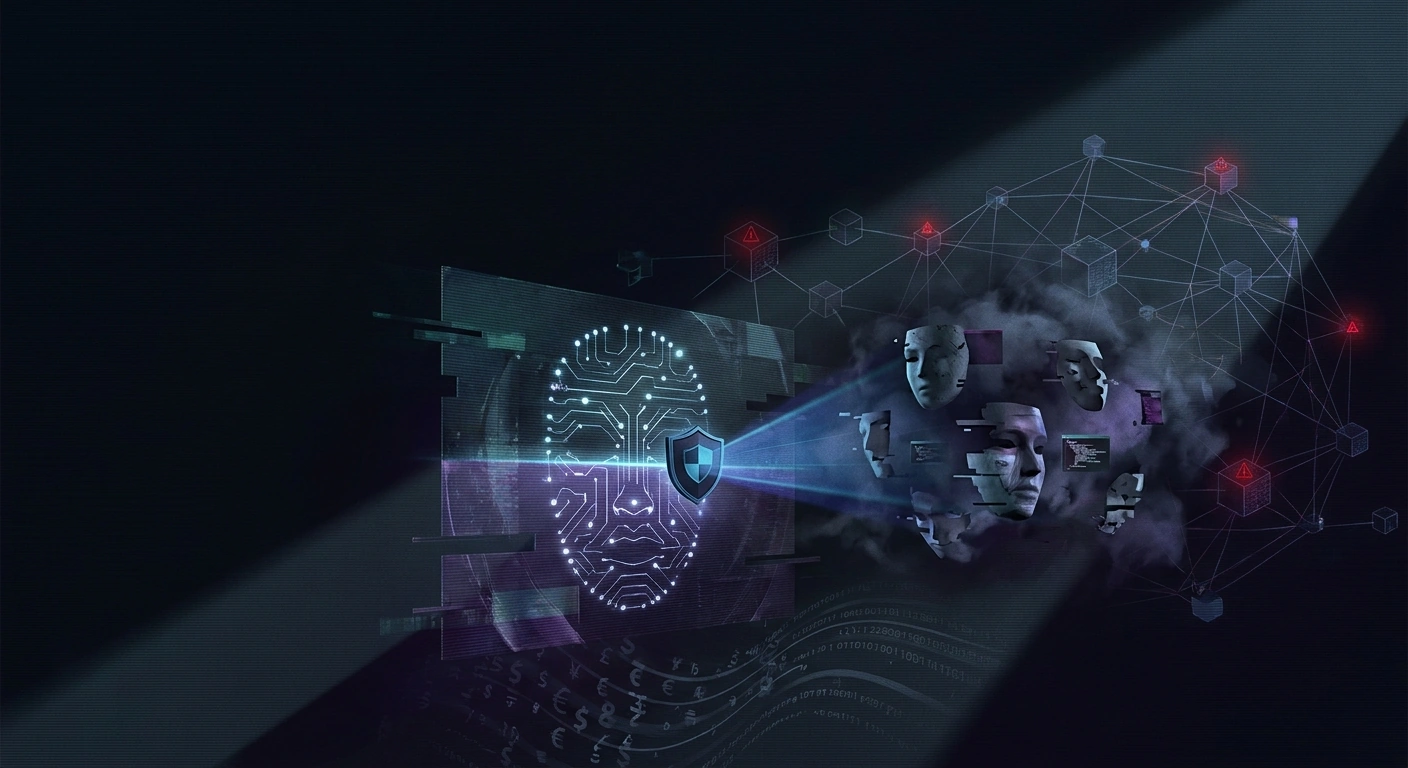
Identity verification provider Sumsub has rolled out a significant upgrade to its deepfake detection technology, responding to a dramatic surge in AI-generated fraud targeting onboarding and KYC (Know Your Customer) workflows. The move underscores how rapidly the synthetic media threat landscape is evolving — and how identity verification vendors are scrambling to keep pace with generative AI tools that can now produce convincing face swaps, voice clones, and synthetic IDs in seconds.
Why the Upgrade Matters
Sumsub, which serves thousands of clients across fintech, crypto, gaming, and online marketplaces, has tracked an explosive increase in deepfake-related fraud attempts over the past two years. The company's previous internal data showed deepfake incidents multiplying across nearly every region, with crypto and fintech among the most targeted verticals. The latest tooling upgrade is aimed squarely at countering increasingly sophisticated face-swap attacks, AI-generated selfie spoofs, and synthetic document fraud that bypasses traditional liveness checks.
Modern deepfake fraud doesn't look like the awkward, glitchy face swaps of 2019. Today's attackers leverage open-source models like SimSwap, InsightFace, and increasingly diffusion-based face-replacement pipelines that can be injected directly into a webcam feed via virtual camera drivers. This means a fraudster can present a fully animated, real-time deepfake to a KYC system that expects a live human face.
Technical Approach to Detection
Sumsub's detection stack combines several layers of analysis. At the core is a multi-modal neural network that examines micro-expressions, skin texture artifacts, lighting inconsistencies, and temporal coherence across video frames. Deepfakes — even high-quality ones — tend to leave subtle traces: imperfect blending at the jawline, inconsistent specular highlights in the eyes, and frequency-domain artifacts invisible to the human eye but detectable by convolutional networks trained on large synthetic-vs-real datasets.
The upgraded system reportedly incorporates improved passive liveness detection, which doesn't require the user to perform challenge actions like blinking or turning their head — actions that modern deepfake pipelines can simulate. Instead, passive systems analyze involuntary biological signals such as remote photoplethysmography (rPPG), where blood flow under the skin produces tiny color variations that synthetic faces typically fail to reproduce accurately.
The Scale of the Problem
Industry reports have shown deepfake fraud attempts in identity verification workflows growing by triple-digit percentages year over year. Crypto exchanges, neobanks, and remote-onboarding platforms have become primary targets, with attackers using stolen ID documents combined with deepfaked selfie videos to open mule accounts at scale. The Hong Kong case earlier this year, where a finance worker was tricked into transferring $25 million after a deepfake video call with a fake CFO, demonstrated that the threat now extends well beyond consumer onboarding into corporate authorization flows.
For Sumsub and competitors like Onfido, Jumio, Veriff, and iProov, deepfake detection has become a critical product differentiator. Regulators in the EU, UK, and US are increasingly scrutinizing whether identity verification providers can actually detect synthetic media — not just claim to.
The Arms Race Continues
The fundamental challenge is that detection is a moving target. Each new generation of generative models — Stable Diffusion variants, HeyGen-style avatar tools, ElevenLabs voice cloning, and emerging real-time face-swap apps — forces detectors to retrain on fresh synthetic data. Adversarial attackers can also fine-tune their pipelines specifically to evade known detectors, particularly when detection models are publicly documented.
Sumsub's upgrade highlights the broader reality: digital authenticity is no longer a passive infrastructure layer but an active battleground. Enterprises onboarding customers remotely now need detection systems that update continuously, ideally with telemetry from millions of real verification attempts. Static, one-shot deepfake detectors trained on outdated datasets are essentially obsolete within months.
Expect more announcements from KYC and biometrics vendors in the coming quarters as the industry consolidates around layered defenses combining liveness, document forensics, behavioral biometrics, and device intelligence — all underpinned by deepfake-aware ML models trained on the latest generative outputs.
Stay informed on AI video and digital authenticity. Follow Skrew AI News.