Tensor Networks Bridge Neural and Symbolic AI Reasoning
New research proposes tensor network mathematics to unify neural networks with symbolic AI, potentially enabling more interpretable and reasoning-capable AI systems.
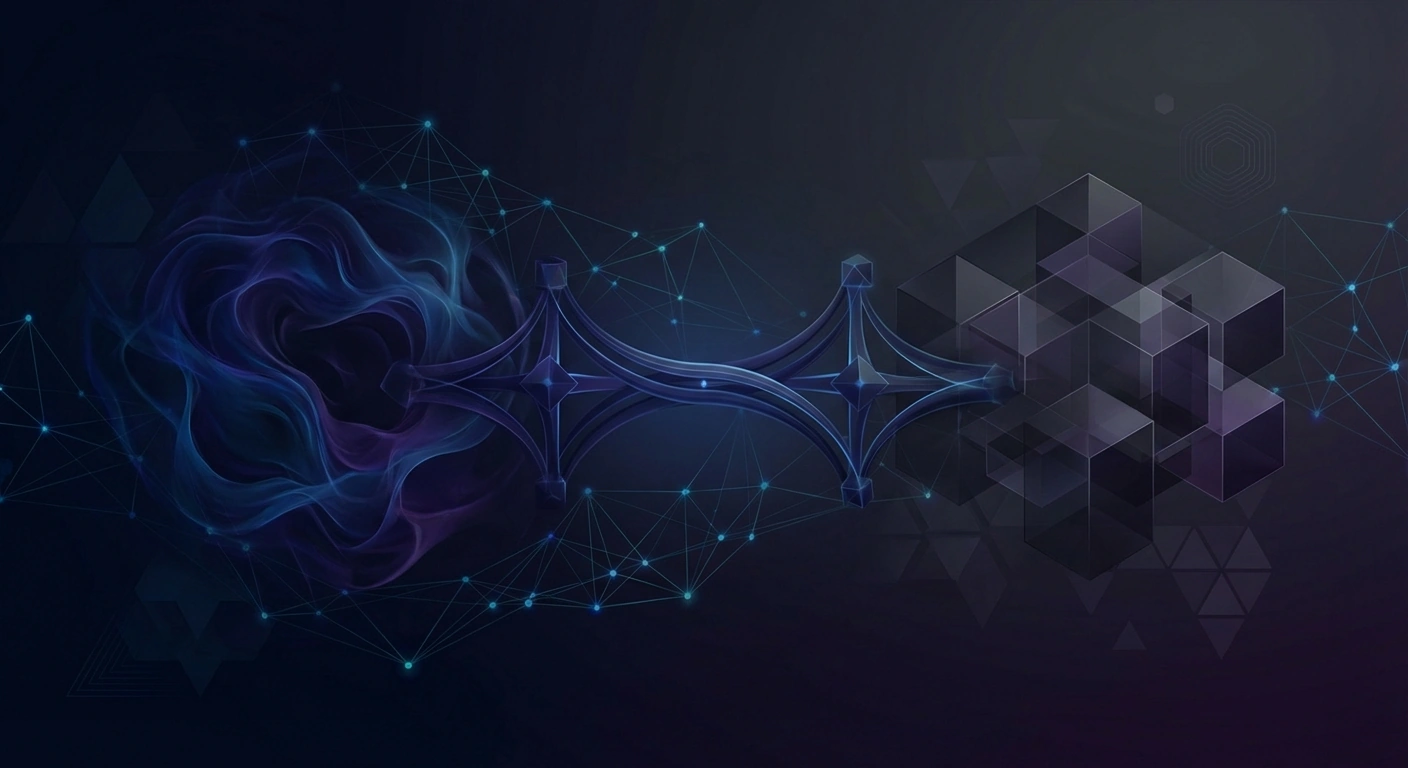
A new research paper from arXiv introduces a groundbreaking theoretical framework that could reshape how we build AI systems capable of both pattern recognition and logical reasoning. The work proposes using tensor networks—a mathematical formalism borrowed from quantum physics—as the foundational language for neuro-symbolic artificial intelligence.
The Neuro-Symbolic Challenge
Modern AI faces a fundamental tension. Neural networks excel at learning patterns from data—recognizing faces, generating images, understanding speech—but they struggle with explicit reasoning, interpretability, and working with structured knowledge. Traditional symbolic AI, built on logic and rules, handles reasoning elegantly but cannot learn from raw data the way neural systems can.
Neuro-symbolic AI attempts to combine these paradigms, but integrating fundamentally different computational approaches has proven challenging. Most existing approaches involve loosely coupling neural and symbolic components, leading to systems that don't fully leverage the strengths of either paradigm.
Tensor Networks as Universal Language
The researchers propose tensor networks as a unifying mathematical framework capable of expressing both neural and symbolic computation in a single formalism. Tensor networks originated in quantum many-body physics as a way to efficiently represent and manipulate high-dimensional quantum states. The key insight is that these same mathematical structures can represent:
- Neural network layers as tensor contractions
- Logical operations as specific tensor structures
- Probabilistic reasoning through tensor decompositions
- Knowledge graphs as multi-dimensional tensor representations
By expressing both neural and symbolic operations in tensor form, the framework enables seamless integration without the awkward handoffs between different computational paradigms that plague current neuro-symbolic systems.
Technical Architecture
The formalism introduces several key technical innovations. First, it defines symbolic tensors—tensor structures that encode logical predicates, relations, and inference rules. Unlike traditional embeddings that represent symbols as dense vectors, symbolic tensors maintain the compositional structure necessary for logical manipulation.
Second, the framework establishes contraction protocols that specify how neural processing (learning from data) and symbolic processing (logical inference) can be combined through tensor operations. These protocols ensure that gradients can flow through both neural and symbolic components, enabling end-to-end training of hybrid systems.
Third, the researchers demonstrate how tensor network decompositions—techniques like matrix product states and tree tensor networks—can be used to control the computational complexity of neuro-symbolic reasoning. This addresses a critical scalability challenge, as naive combinations of neural and symbolic processing can lead to exponential computational costs.
Implications for AI Development
This theoretical framework has significant implications for future AI systems. For interpretability, tensor network representations can expose the reasoning pathways used by AI systems, potentially addressing the "black box" problem that limits trust in neural networks for high-stakes applications.
For generative AI, the ability to incorporate symbolic constraints into neural generation could lead to more controllable and reliable content generation systems. Imagine video generation models that can reason about physical constraints, narrative logic, or factual consistency through integrated symbolic components.
For detection and authentication, neuro-symbolic systems could potentially combine the pattern recognition capabilities that identify synthetic media with logical reasoning about provenance, consistency, and authenticity markers. This hybrid approach might prove more robust against adversarial attacks than purely neural detection systems.
Connections to Quantum Computing
The tensor network formalism also creates a natural bridge to quantum computing. Since tensor networks already describe quantum systems, neuro-symbolic AI built on this framework could potentially leverage quantum hardware for certain computations. While practical quantum advantage for AI remains distant, establishing theoretical compatibility now could prove valuable as quantum technology matures.
Challenges and Future Directions
The paper acknowledges significant challenges remain. Converting existing neural architectures to tensor network form requires careful engineering. Training dynamics in tensor network neuro-symbolic systems are not yet fully understood. And scaling to the size of modern large language models presents computational challenges that tensor decomposition techniques must address.
Nevertheless, this work represents an important theoretical advance in the quest for AI systems that combine the learning capabilities of neural networks with the reasoning capabilities of symbolic AI. As generative AI systems become more capable and more widely deployed, such hybrid approaches may prove essential for building systems that are not only powerful but also interpretable, controllable, and trustworthy.
Stay informed on AI video and digital authenticity. Follow Skrew AI News.