Japanese Telecoms Building Deepfake Audio Detection Apps
Major Japanese telecom companies are developing mobile applications to detect AI-generated voice clones, addressing the growing threat of audio deepfakes in real-time phone calls.
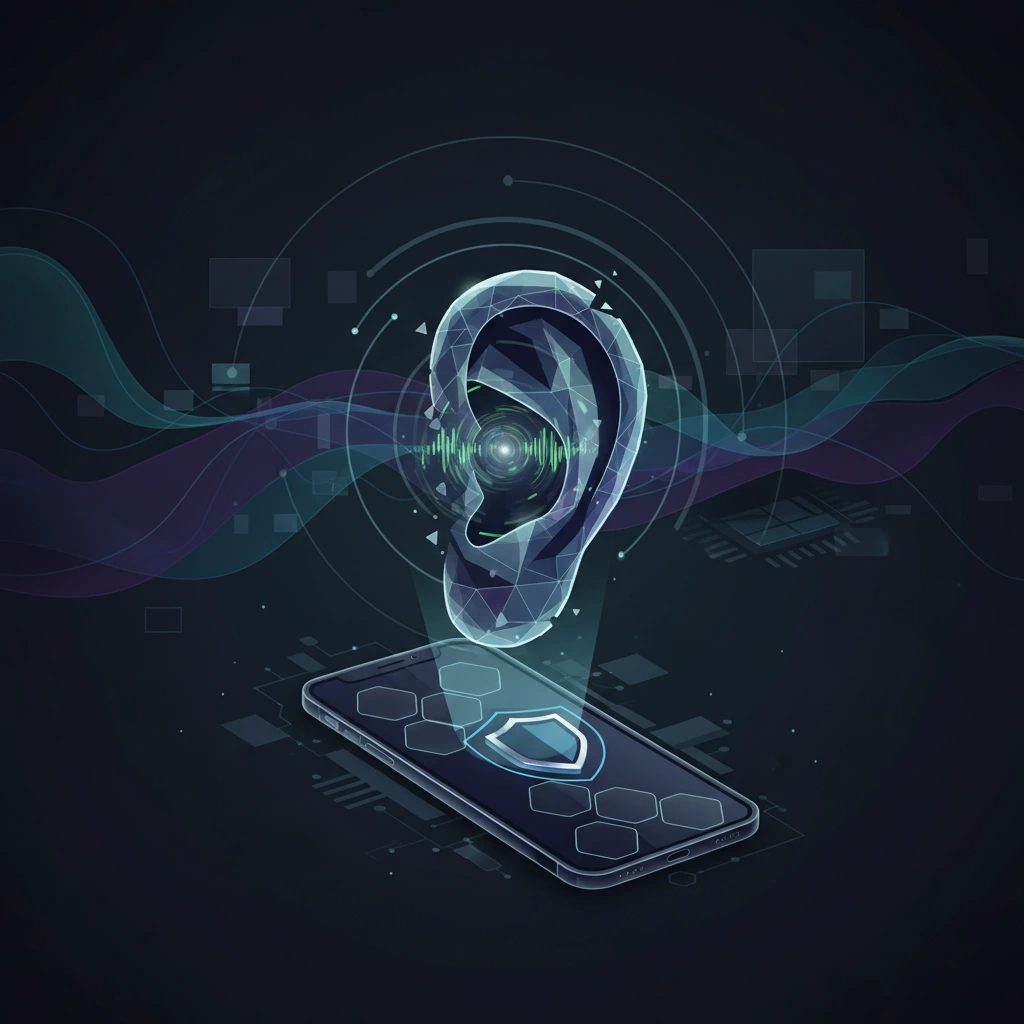
Japan's telecommunications industry is taking a proactive stance against the rising tide of AI-generated voice fraud. Major Japanese telecom companies are developing smartphone applications designed to detect deepfake audio in real-time, marking a significant step toward consumer-facing synthetic media detection tools.
The Growing Voice Clone Threat
Voice cloning technology has advanced rapidly over the past two years, with AI systems now capable of generating convincing replicas of a person's voice from just a few seconds of sample audio. This capability has created a new vector for fraud, particularly in phone-based scams where criminals can impersonate family members, business executives, or authority figures with startling accuracy.
The Japanese market represents a particularly compelling use case for such detection technology. Japan has an aging population that is especially vulnerable to phone-based fraud schemes, and the country has seen a surge in sophisticated scam calls that leverage AI-generated voices. Traditional voice phishing (vishing) attacks are being supercharged by voice synthesis technology, making it increasingly difficult for victims to distinguish between genuine callers and AI imposters.
Technical Approaches to Audio Deepfake Detection
While specific technical details of the Japanese telecom solutions remain limited, audio deepfake detection generally relies on several key methodologies. Spectral analysis examines the frequency patterns in audio, looking for artifacts that AI voice generators typically introduce. These can include unusual harmonic structures, inconsistent formant patterns, or telltale signs in the higher frequency ranges that human voices naturally produce but synthetic voices often miss.
Neural network classifiers trained on large datasets of both genuine and synthetic speech can identify subtle patterns that distinguish AI-generated audio. These models analyze features like prosody (rhythm and intonation), breathing patterns, and micro-variations in pitch that are characteristic of natural human speech.
More advanced detection systems employ temporal analysis, examining how voice characteristics change over time during a conversation. AI-generated voices often exhibit unnatural consistency or, conversely, abrupt transitions that don't match natural speech patterns.
Consumer-Facing Detection: A New Frontier
The move to deploy detection technology directly to consumers via smartphone apps represents an important evolution in the synthetic media authentication space. Previously, deepfake detection tools have primarily been enterprise-focused, targeting media organizations, financial institutions, and security agencies. Consumer applications democratize access to authentication technology.
For telecom companies, this capability could become a significant value-added service. As voice cloning technology becomes more accessible through services like ElevenLabs, Resemble AI, and open-source alternatives, the potential for misuse grows proportionally. Telecoms that can offer reliable detection give their customers tangible protection against an emerging threat category.
Challenges in Real-Time Detection
Deploying audio deepfake detection in real-time phone calls presents unique technical challenges. Unlike post-hoc analysis of recorded audio, real-time detection must process audio streams with minimal latency to be useful. Users need immediate feedback about the authenticity of a caller's voice, not analysis delivered minutes or hours later.
This requires efficient algorithms that can run on mobile devices without excessive battery drain or processing overhead. Edge computing approaches, where analysis happens locally on the device rather than in the cloud, may be necessary to achieve the required speed while maintaining privacy.
There's also the challenge of accuracy in diverse acoustic environments. Phone calls occur in noisy environments, over varying connection qualities, and with different audio codecs that can introduce their own artifacts. Detection systems must distinguish between compression artifacts and synthesis artifacts—a non-trivial technical problem.
The Arms Race Continues
It's worth noting that deepfake detection exists within an adversarial context. As detection methods improve, so too do synthesis techniques designed to evade them. Voice cloning developers actively work to eliminate the artifacts that detection systems target, creating an ongoing technological arms race.
This dynamic means that detection apps will require continuous updates and model retraining to remain effective. The Japanese telecom companies entering this space are committing to an ongoing technical challenge, not a one-time product development effort.
Implications for the Broader Industry
Japan's initiative could serve as a template for other markets. As deepfake audio threats become more prevalent globally, telecoms in other regions may follow suit with their own detection offerings. This could accelerate investment in audio authentication research and drive standardization efforts around synthetic media detection.
For the synthetic media and digital authenticity industry, consumer-facing detection apps represent both validation and challenge. They validate the importance of authentication technology while raising the bar for what users expect in terms of accessibility and real-time performance.
The development also highlights the increasingly important role that infrastructure providers—telecoms, platforms, device manufacturers—will play in the authenticity ecosystem. Detection may ultimately become a built-in feature of communication infrastructure rather than a standalone application.
Stay informed on AI video and digital authenticity. Follow Skrew AI News.