Can Humans Spot AI-Edited Bank Statements? A Study
A new empirical study tests whether loan processors and underwriters can detect AI-edited financial statements—exposing a major blind spot in document authenticity as generative tools make forgery trivially easy.
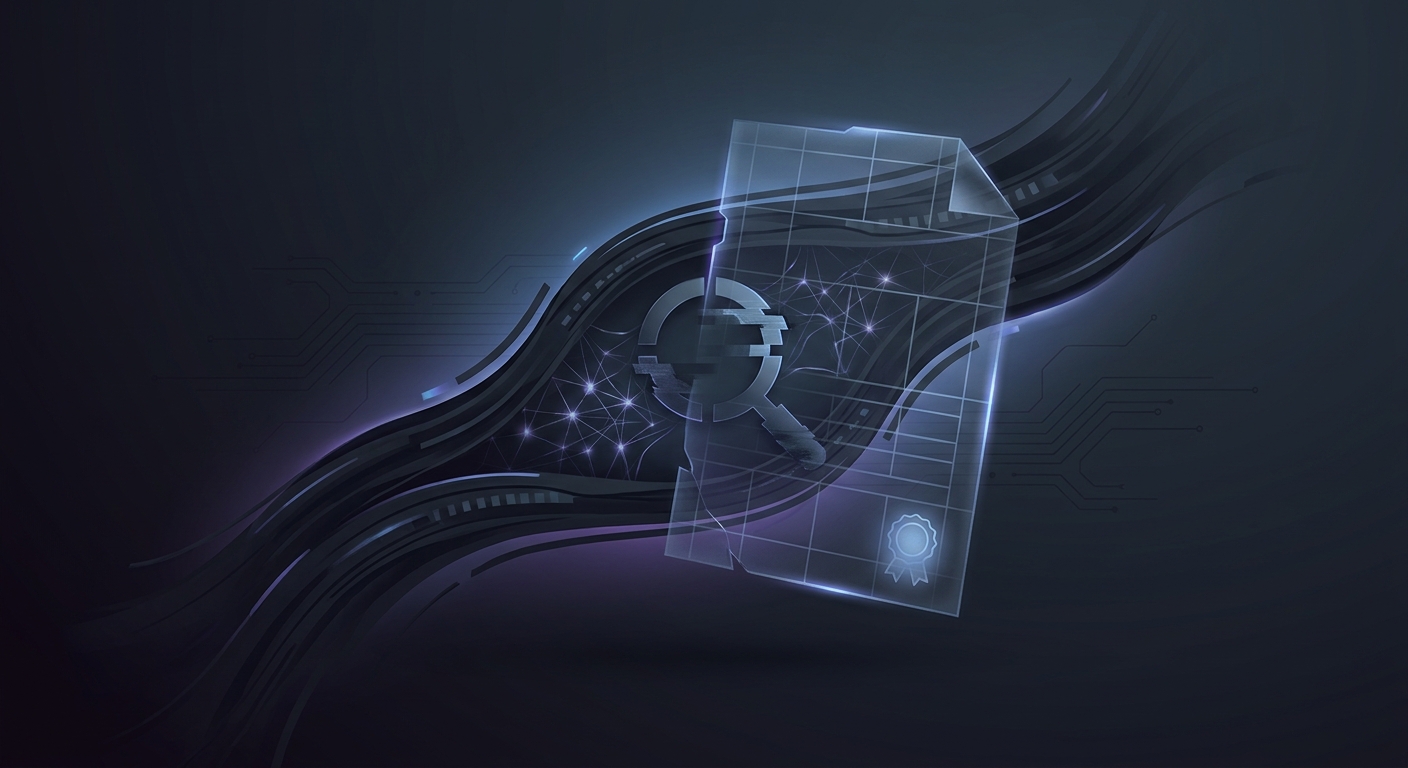
Generative AI has made image and document editing effortless—and that ease is colliding with one of the most consequential paper trails in finance: the bank statement. A new empirical study on arXiv asks a deceptively simple question with enormous practical stakes: Can loan processors and underwriters actually spot AI-edited financial statements? The findings extend the deepfake conversation beyond faces and voices into the quieter but equally damaging realm of synthetic documents.
Why Document Deepfakes Matter
When people think about synthetic media, they picture face swaps, cloned voices, or AI-generated video. But financial fraud increasingly depends on something far more mundane: altered PDFs and scanned statements. A single tampered balance, a modified transaction history, or a fabricated deposit can be the difference between a loan approval and a rejection. Historically, forging such documents required technical skill. Today, inpainting models, large multimodal editors, and layout-aware generative tools can modify a number, rebalance a column, or clone a transaction line in seconds—often with pixel-perfect font matching and preserved formatting.
This study zeroes in on the human layer of defense. Before automated fraud-detection systems flag anything, a real person—a loan processor or underwriter—typically reviews the documents. The research tests whether these trained professionals can reliably distinguish authentic statements from AI-edited ones.
The Experimental Setup
The empirical design pits human reviewers against a set of documents containing AI-manipulated edits of varying subtlety. By measuring detection accuracy, false-negative rates, and confidence levels, the study quantifies exactly how vulnerable the manual review process is. This matters because underwriting pipelines often treat human review as a backstop—an assumption that collapses if humans can't actually see the manipulation.
The key metrics in studies like this typically include detection rate (how often edits are caught), false-acceptance rate (how often forged documents pass as genuine), and the correlation between reviewer confidence and accuracy. A particularly dangerous pattern emerges when reviewers are confident but wrong—a hallmark of convincing synthetic content across every media type, from deepfake video to cloned audio.
The Authenticity Problem Generalizes
What makes this research valuable for the broader synthetic media field is that it reinforces a recurring lesson: human perception is a weak detector of high-quality generative edits. We've seen this in deepfake video studies where viewers fail to identify manipulated clips, and in voice-cloning research where listeners can't distinguish synthetic speech from real recordings. Documents are simply the next frontier—and arguably a softer target, since financial paperwork lacks the subtle motion and biometric cues that sometimes betray fake faces.
Unlike a face swap, an edited bank statement has no uncanny-valley tell. A changed digit in a monospaced font leaves no visual artifact a human can perceive. This asymmetry means that document authenticity will almost certainly need to shift from human judgment to technical verification.
Toward Technical Defenses
The implications point squarely toward automated detection and provenance solutions. Potential defenses include forensic analysis of PDF metadata and compression artifacts, pixel-level inconsistency detection around edited regions, and cryptographic verification at the source. Just as the C2PA standard and content credentials aim to authenticate images and video, financial institutions may need bank-issued digital signatures or verifiable statement APIs that bypass the editable PDF entirely.
For fraud teams, the study is a wake-up call: relying on a human underwriter to catch AI-edited statements is a losing strategy. The more statements can be fetched directly from source-of-truth systems—via open banking connections or signed digital documents—the less room there is for generative tampering to slip through.
The Bigger Picture
This research sits at the intersection of synthetic media and real-world financial risk. It demonstrates that the deepfake threat isn't confined to viral videos or political misinformation—it quietly threatens the integrity of everyday verification processes that move trillions of dollars. As generative editing tools become more accessible, every document-based trust system faces the same reckoning the imaging and audio worlds are already navigating.
The core takeaway is sobering but clarifying: when AI editing becomes invisible to the human eye, authenticity must be engineered, not assumed. Whether through cryptographic provenance, machine-learning forensics, or source-level verification, the defense has to be technical—because the human reviewer, as this study suggests, can no longer be trusted to spot the difference.
Stay informed on AI video and digital authenticity. Follow Skrew AI News.