JEPA World Models: AI That Predicts Without Drawing
JEPA world models skip pixel generation and predict in abstract latent space instead. Here's why this architecture matters for video prediction, synthetic media, and the future of generative AI.
Most of the generative AI making headlines today works by drawing. Diffusion models, video synthesizers, and image generators all share a common obsession: producing pixels. Ask them to predict the future of a scene, and they will attempt to render every leaf, shadow, and reflection in painstaking detail. But a competing school of thought argues this is exactly the wrong approach. Enter JEPA — the Joint Embedding Predictive Architecture — a family of world models that deliberately refuses to draw the future.
What JEPA Actually Does
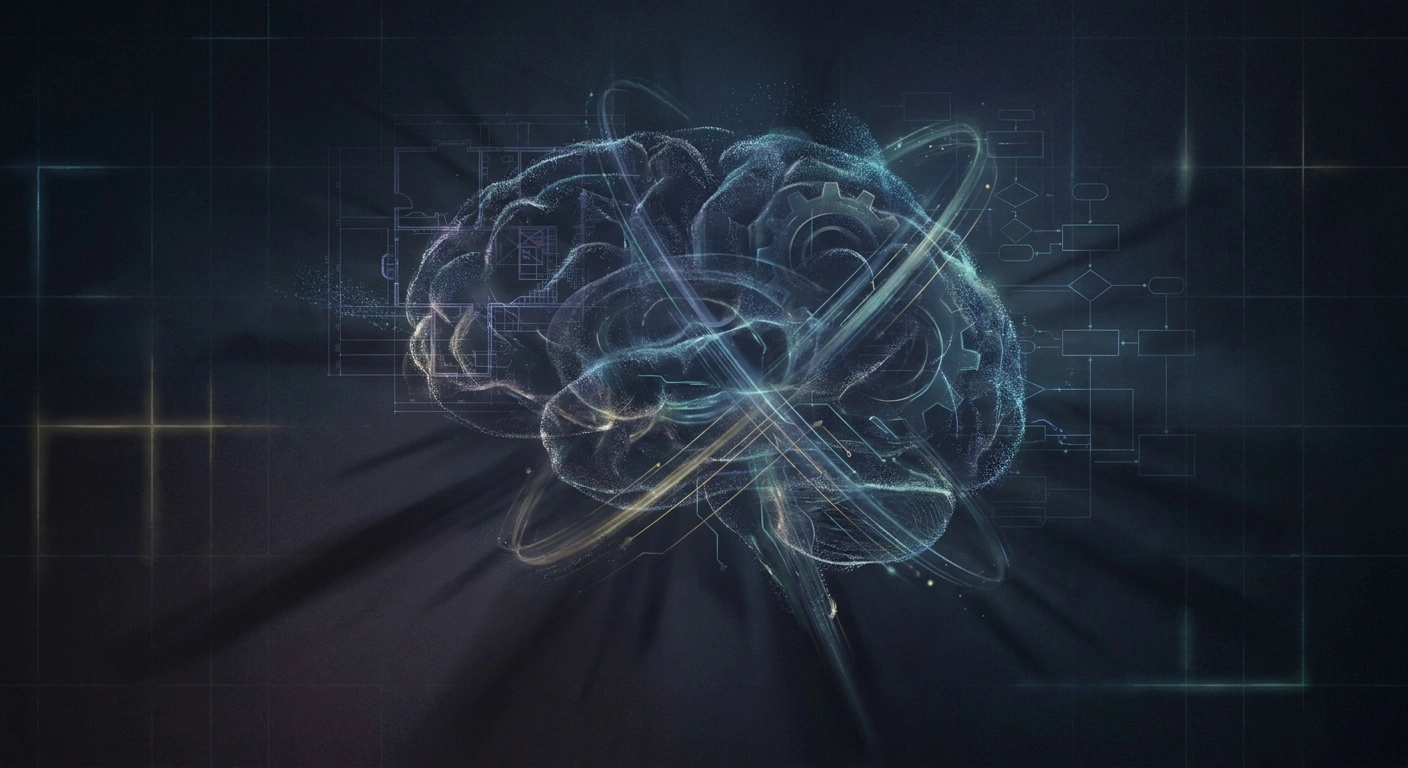
JEPA, championed by Meta's chief AI scientist Yann LeCun, flips the generative script. Instead of predicting raw pixels, it predicts in an abstract latent space — a compressed representation that captures the meaning of a scene rather than its surface appearance. The model learns to forecast what happens next not by rendering an image, but by predicting the embedding of that future state.
The reasoning is intuitive once stated plainly: predicting every pixel is wasteful and often impossible. If you watch a leaf fall, you cannot know precisely where each blade of grass will bend, nor should you need to. A model that tries to predict those irreducible details burns enormous compute modeling noise. JEPA sidesteps this by operating at a level of abstraction where only the predictable, meaningful structure survives.
The Architecture in Brief
A JEPA system typically contains an encoder that maps inputs into latent representations, and a predictor that estimates the latent representation of a target (for example, a masked or future portion of the input) from a context. Crucially, the loss is computed in representation space, not in pixel space. This is the key architectural departure from generative models like autoencoders or diffusion systems.
To avoid the trivial solution — where the encoder collapses everything to a constant and the predictor's job becomes meaningless — JEPA variants use asymmetric designs, stop-gradients, and exponential moving-average target encoders. Video-oriented versions, such as V-JEPA, extend this to spatiotemporal data, learning to predict masked regions of video clips in latent space. The result is a model that builds an internal understanding of physical dynamics without ever synthesizing a frame.
Why This Matters for Synthetic Media
For a field obsessed with photorealistic generation, JEPA's refusal to draw might seem beside the point. But the implications run deep. First, world models that understand physics in latent space could become the planning and reasoning backbone behind future video generators — ensuring that synthesized footage obeys consistent physical rules rather than hallucinating impossible motion. The gap between a diffusion model that merely looks plausible and one that genuinely understands cause and effect is exactly what latent prediction aims to close.
Second, representation-level understanding is a powerful substrate for detection and authenticity. Models that learn robust, abstract representations of how real-world video behaves could flag synthetic content that violates those learned dynamics. A deepfake might fool a pixel-level inspection yet betray itself at the level of physical consistency — subtle inconsistencies in motion, lighting dynamics, or object permanence that a world model would find implausible.
The Philosophical Divide
The JEPA debate reflects a genuine fork in AI's road. One camp bets that scaling pixel-generating models will eventually yield systems that understand the world as a byproduct of learning to render it. LeCun's camp argues the opposite: understanding should come first, and generation (if needed at all) is a downstream convenience. By learning to predict abstractly, the model is forced to grasp what is essential and discard what is not — a quality LeCun links to the path toward more general machine intelligence.
This is not merely academic. The compute economics differ dramatically. Pixel-space prediction scales poorly because the output dimensionality is enormous and much of it is unpredictable detail. Latent prediction concentrates learning on the information that actually matters, potentially offering far more efficient training for systems meant to reason about visual environments.
The Takeaway
JEPA world models represent a bet that the future of visual AI lies not in ever-more-detailed drawing, but in deeper, more efficient understanding. For creators, this could eventually mean generation tools with genuine physical common sense. For those working on digital authenticity, it points toward detection systems that reason about plausibility rather than pixels. Whether or not latent-space prediction ultimately dethrones diffusion, it reframes a question the whole field is wrestling with: should an AI that understands the world have to paint it first?
Stay informed on AI video and digital authenticity. Follow Skrew AI News.