Zero-Knowledge Proofs for Frontier AI Training Verification
New research demonstrates that zero-knowledge proofs can verify frontier AI training claims without exposing model weights or data—a breakthrough for AI governance, authenticity, and trust in synthetic media systems.
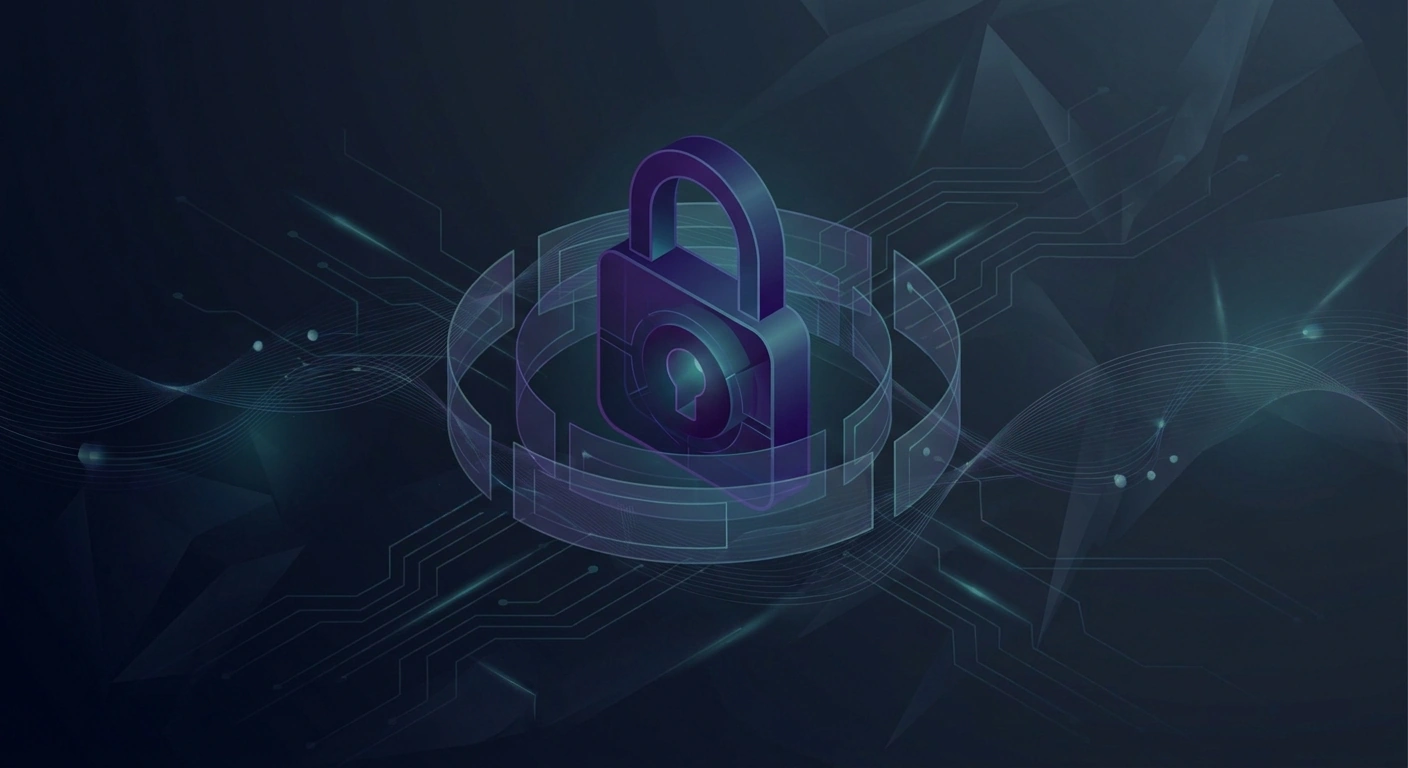
A new research paper argues that zero-knowledge (ZK) verification of frontier AI training is technically feasible—a development with significant implications for AI governance, model provenance, and the authenticity of synthetic media systems. As frontier models grow more powerful and more consequential, the ability to verify how a model was trained—without forcing labs to reveal proprietary weights, datasets, or training code—has emerged as a critical missing piece of the AI safety and authenticity stack.
The Verification Problem
Today, when an AI lab claims it trained a model using specific data, compute budgets, safety filters, or alignment procedures, the outside world largely has to take that claim on faith. Regulators, auditors, and downstream users have no cryptographic way to confirm that a model labeled "trained without copyrighted data" or "trained with RLHF safety constraints" actually was. This trust gap is especially acute for generative video, voice cloning, and image synthesis models, where claims about training data provenance directly affect copyright exposure, consent, and the authenticity of downstream content.
The paper proposes that zero-knowledge proofs—cryptographic protocols that allow one party to prove a statement is true without revealing the underlying information—can bridge this gap. A lab could prove, for example, that a model checkpoint resulted from a specific training procedure on a committed dataset, using a specific amount of compute, without disclosing the weights or data themselves.
Why ZK for AI Training Is Hard
Generating zero-knowledge proofs for computations as massive as frontier model training has historically been considered intractable. Modern ZK proof systems (zk-SNARKs, zk-STARKs) impose substantial overhead per operation—often orders of magnitude more compute than the underlying computation. Frontier training runs already consume tens of millions of GPU-hours; naive ZK overhead would push verification costs into the impossible range.
The research argues that recent advances make this tractable through a combination of techniques:
- Probabilistic and sampled verification: Rather than proving every floating-point operation, verifiers can audit randomly sampled training steps, reducing prover overhead by orders of magnitude while retaining statistical guarantees.
- Cryptographic commitments to datasets and checkpoints: Labs commit to hashes of training data and model checkpoints up front, enabling later proofs that specific batches were used.
- Hardware-assisted attestation: Trusted execution environments on accelerators can complement ZK proofs, attesting to compute usage and training step authenticity.
- Recursive proof composition: Aggregating proofs across training steps into a single succinct proof of the entire run.
Implications for Synthetic Media and Authenticity
For the deepfake and synthetic media ecosystem, ZK training verification has direct downstream effects. Provenance claims about generative models—"this video generator was trained only on licensed footage," "this voice cloning model excludes non-consenting speakers," "this image model includes C2PA-compatible watermarking at training time"—could become cryptographically verifiable rather than marketing assertions.
This matters because content authenticity standards like C2PA currently focus on signing the output side of the pipeline. They can prove a video was produced by a specific tool at a specific time, but they cannot prove anything about how the underlying model was built. ZK training proofs would extend the chain of trust backward to the model itself, giving regulators, platforms, and end users a way to distinguish responsibly-trained generative systems from those with opaque provenance.
Governance and Compliance Use Cases
The paper outlines several governance scenarios where ZK verification would be transformative:
- Compute thresholds: Verifying whether a training run exceeded regulatory thresholds (such as those in the EU AI Act or US executive orders) without revealing proprietary details.
- Safety evaluations: Proving that specific evals or red-teaming procedures were applied before release.
- Training data audits: Demonstrating exclusion of prohibited content (CSAM, copyrighted material, personal data) without exposing the corpus.
- Export controls: Allowing jurisdictions to verify model capabilities and origin without forcing disclosure of trade secrets.
Open Challenges
The work acknowledges significant remaining obstacles: prover-side overhead is still substantial, standards for what should be proven do not yet exist, and the social and institutional infrastructure—auditors, certification bodies, regulatory acceptance—is nascent. But the central claim is that the cryptographic and systems-level barriers are no longer the bottleneck. Verification is now a policy and engineering problem, not an impossibility proof.
For an industry where every generated image, video, and voice clone raises questions about provenance and consent, the prospect of cryptographically verifiable training is a meaningful step toward an authenticity infrastructure that scales with the technology it governs.
Stay informed on AI video and digital authenticity. Follow Skrew AI News.