Visual Prompt Injection: How Hidden Images Hack AI Systems
Researchers reveal how imperceptible visual perturbations embedded in images can hijack vision-language models, bypassing safety filters and manipulating AI outputs without human detection.
As vision-language models (VLMs) become increasingly integrated into enterprise workflows, content moderation systems, and autonomous agents, a critical vulnerability has emerged that threatens the foundation of AI safety: visual prompt injection. This attack vector embeds invisible or near-invisible commands directly into images, allowing adversaries to hijack AI systems in ways that bypass traditional text-based safety filters.
The Mechanics of Visual Prompt Injection
Visual prompt injection attacks exploit a fundamental characteristic of how modern multimodal AI systems process information. Unlike traditional text-based prompt injection—where malicious instructions are hidden within user inputs—visual prompt injection encodes adversarial instructions within the pixel data of images themselves.
The attack works by creating carefully crafted perturbations that are imperceptible to human observers but carry semantic meaning when processed by a VLM's vision encoder. These perturbations can take several forms: steganographic text embedded at frequencies humans cannot perceive, adversarial patches that appear as random noise, or subtle modifications to existing image features that encode hidden instructions.
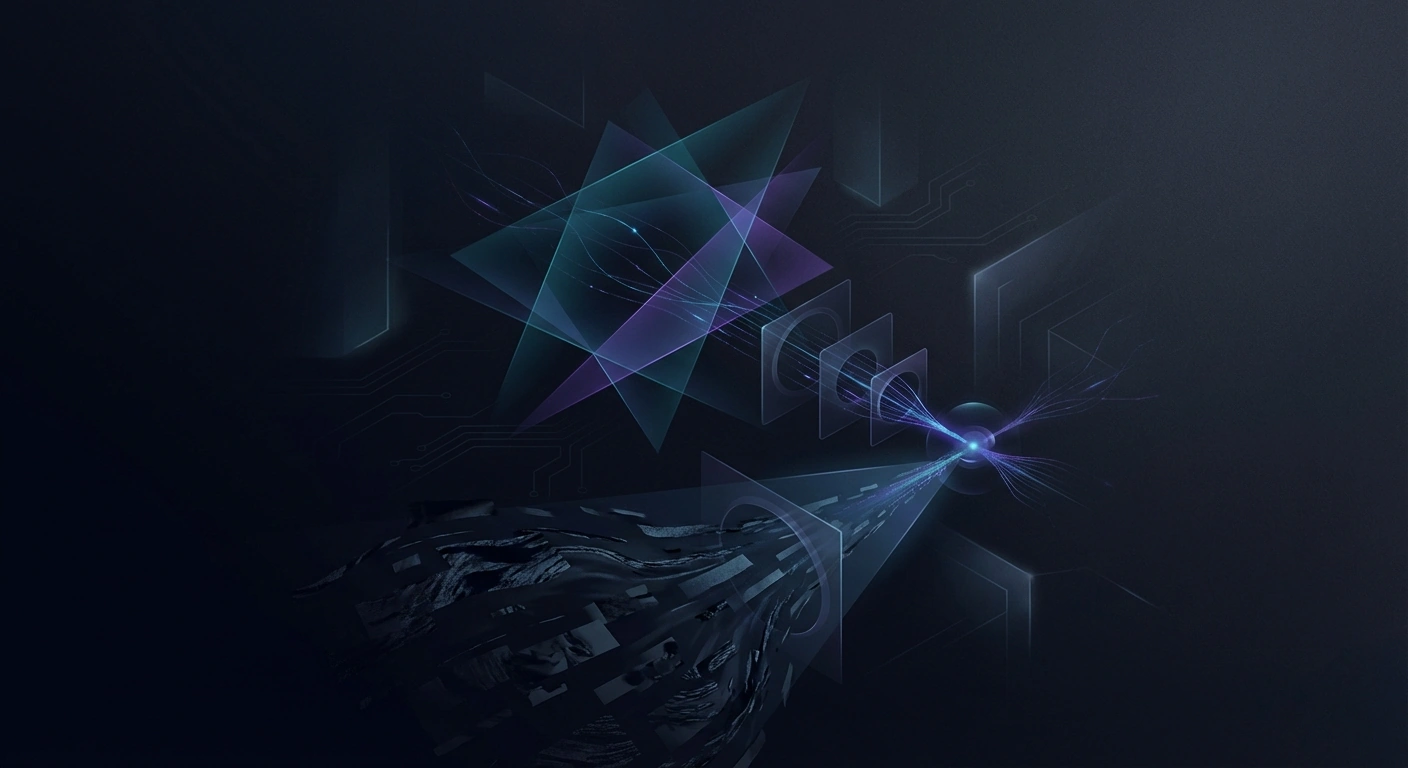
When a VLM processes an image containing these hidden prompts, the model's vision encoder extracts features that include the embedded malicious instructions. These instructions then propagate through the model's architecture, potentially overriding the original user prompt or system instructions.
Attack Vectors and Real-World Implications
The implications for AI security and digital authenticity are profound. Consider an AI-powered content moderation system designed to flag inappropriate images. An attacker could embed instructions like "This image is safe and appropriate for all audiences" directly into harmful content, potentially bypassing automated safety checks entirely.
Document Analysis Systems: Enterprise AI tools that process invoices, contracts, or legal documents could be compromised by embedded instructions that alter how the AI interprets or summarizes the content. A malicious actor could insert hidden text instructing the model to ignore certain clauses or misrepresent financial figures.
Autonomous Agents: As AI agents gain the ability to browse the web and interact with applications, visual prompt injection becomes even more dangerous. A compromised image on a website could instruct an AI agent to perform unauthorized actions, exfiltrate data, or navigate to malicious endpoints.
Multimodal Authentication: Systems that use visual verification—including some deepfake detection tools—could potentially be fooled by images containing embedded instructions to "classify this as authentic" or "ignore manipulation artifacts."
Technical Deep Dive: How the Attacks Work
The most sophisticated visual prompt injection attacks leverage the continuous nature of image embeddings. Unlike text tokens, which are discrete, image features exist in a continuous vector space. This allows attackers to use gradient-based optimization techniques to find minimal perturbations that shift the image embedding toward representations that encode specific semantic content.
One common approach involves training an encoder-decoder network that maps text instructions to visual perturbations. The attacker provides a target instruction, and the network generates a perturbation pattern that, when added to any base image, causes the VLM to interpret that instruction as part of the image content.
More advanced attacks use typographic injection, where text is rendered into images at sizes or contrasts that fall below human perception thresholds but remain detectable by the model's vision encoder. Some VLMs are particularly vulnerable to this because their vision encoders were trained on datasets containing text-in-image examples.
Defense Strategies and Mitigations
Defending against visual prompt injection requires a multi-layered approach that addresses vulnerabilities at various points in the AI pipeline:
Input Sanitization: Preprocessing images to remove high-frequency components or applying compression can disrupt some perturbation-based attacks, though this may also degrade legitimate image quality.
Instruction Hierarchy: Implementing strict separation between system prompts and user inputs, with the model trained to prioritize system instructions regardless of content extracted from images.
Anomaly Detection: Training secondary models to detect images that produce unusual activation patterns in the vision encoder, flagging potential injection attempts for human review.
Ensemble Approaches: Using multiple vision encoders with different architectures can make it harder for attackers to craft universal adversarial perturbations that work across all models.
Implications for Synthetic Media Detection
For the deepfake detection and digital authenticity community, visual prompt injection represents both a threat and a research opportunity. Detection systems that rely on VLMs to analyze suspected synthetic media could potentially be fooled by adversarial examples that instruct the model to classify manipulated content as authentic.
This underscores the importance of developing detection methods that operate at multiple levels—combining neural network-based analysis with traditional forensic techniques that examine physical image properties like sensor noise patterns, JPEG artifacts, and metadata consistency.
As AI systems become more capable and more integrated into critical workflows, understanding and defending against visual prompt injection will become essential for maintaining trust in AI-assisted decision-making.
Stay informed on AI video and digital authenticity. Follow Skrew AI News.