UC Security Faces New Threats From Deepfake Technology
As deepfake technology advances, unified communications platforms face growing risks from AI-generated voice and video impersonation, forcing enterprises to rethink security strategies.
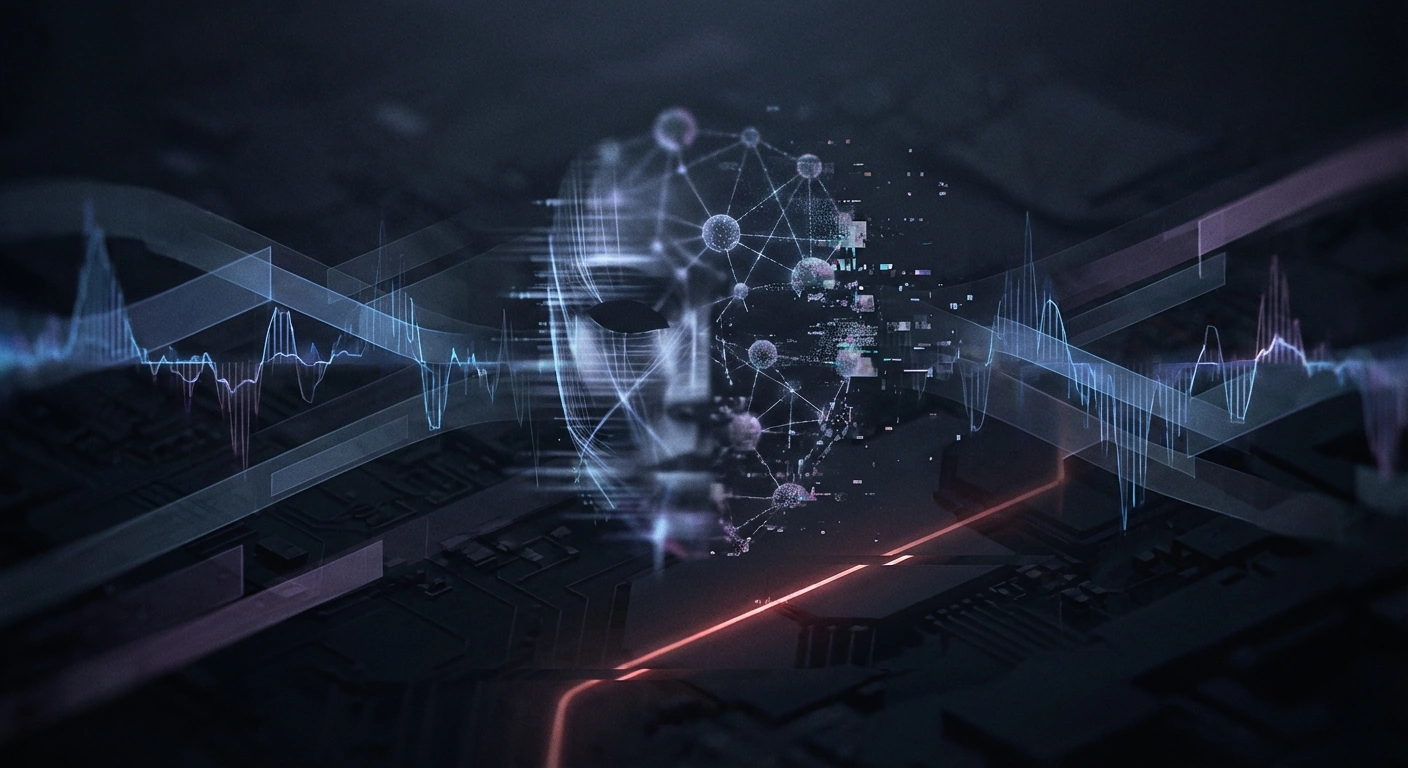
Unified communications (UC) platforms have become the backbone of modern enterprise collaboration, connecting teams through voice calls, video conferences, and messaging. But as deepfake technology rapidly matures, these same platforms are becoming attack vectors for sophisticated AI-powered impersonation schemes that traditional security measures were never designed to handle.
The Deepfake Threat to Enterprise Communications
The convergence of real-time voice cloning, face-swapping video generation, and increasingly convincing synthetic media has created a perfect storm for UC security teams. What once required significant technical expertise and computing resources to produce a convincing deepfake can now be accomplished with consumer-grade tools and minimal training data. A few seconds of someone's voice or a handful of photos can be enough to create a real-time impersonation capable of fooling colleagues, executives, and even security protocols.
The implications for UC platforms are profound. Video conferencing tools like Zoom, Microsoft Teams, and Webex are now potential stages for real-time deepfake attacks, where an attacker can join a meeting appearing and sounding like a trusted executive. Voice-based UC channels are equally vulnerable, with AI voice cloning capable of replicating speech patterns, accent, tone, and cadence with startling accuracy.
High-profile incidents have already demonstrated the real-world damage. In early 2024, a finance worker at a multinational firm was tricked into transferring approximately $25 million after a deepfake video call featuring what appeared to be the company's CFO and other senior staff. These aren't hypothetical scenarios—they represent an escalating pattern of AI-enabled social engineering targeting enterprise communications infrastructure.
Why Traditional UC Security Falls Short
Conventional UC security frameworks were built around perimeter defense concepts: encryption in transit and at rest, multi-factor authentication, access controls, and session management. While these remain essential, they fundamentally assume that once a user is authenticated, they are who they claim to be throughout the session. Deepfakes shatter this assumption.
A deepfake attack doesn't need to breach encryption or bypass firewalls. It exploits the human layer of trust that UC platforms facilitate. When employees see a familiar face and hear a familiar voice on a video call, they are neurologically predisposed to trust the interaction. No amount of network-level security addresses this vulnerability.
Additionally, most UC platforms lack built-in mechanisms for continuous identity verification during active sessions. Authentication happens at login, but there's no ongoing validation that the audio and video streams represent the authenticated user rather than a synthetic overlay.
Emerging Defense Strategies
Security professionals are beginning to develop multi-layered approaches specifically tailored to the deepfake threat in UC environments:
Real-Time Media Authentication
Several vendors are developing tools that analyze audio and video streams in real time for artifacts characteristic of synthetic generation. These detection systems look for subtle inconsistencies in lip-sync timing, micro-expression patterns, audio spectral anomalies, and compression artifacts that differ between organic and AI-generated media. Integration of such detection directly into UC platforms represents one of the most promising near-term defenses.
Content Provenance and Watermarking
Standards like the C2PA (Coalition for Content Provenance and Authenticity) specification are gaining traction as a way to cryptographically bind media streams to verified sources. If UC platforms adopt provenance standards, each video and audio stream could carry verifiable metadata proving its origin and integrity, making synthetic substitution detectable.
Behavioral Biometrics
Beyond face and voice recognition, behavioral biometric systems analyze patterns like typing rhythm, mouse movements, and interaction patterns that are significantly harder to replicate synthetically. Layering these signals into UC authentication can provide continuous verification without disrupting the user experience.
Zero-Trust Communication Frameworks
Extending zero-trust principles beyond network access to the communication layer itself means treating every media stream as potentially compromised until verified. This includes implementing challenge-response protocols, out-of-band verification for sensitive requests, and AI-assisted anomaly detection on communication patterns.
The Path Forward for Enterprises
Organizations need to recognize that UC security can no longer be treated as a subset of network security. The deepfake threat demands a dedicated strategy that encompasses technology, policy, and training. Employees must be educated about the possibility of synthetic impersonation on calls they assumed were secure. Security teams need detection tools integrated at the platform level. And procurement decisions for UC solutions should increasingly weigh vendors' readiness to address AI-generated media threats.
As generative AI capabilities continue to advance at a rapid pace, the window for proactive defense is narrowing. Enterprises that wait for a deepfake-enabled breach before acting may find themselves learning a very expensive lesson about the new reality of digital communication security.
Stay informed on AI video and digital authenticity. Follow Skrew AI News.