Trust as Security: New Framework for Deepfake Defense
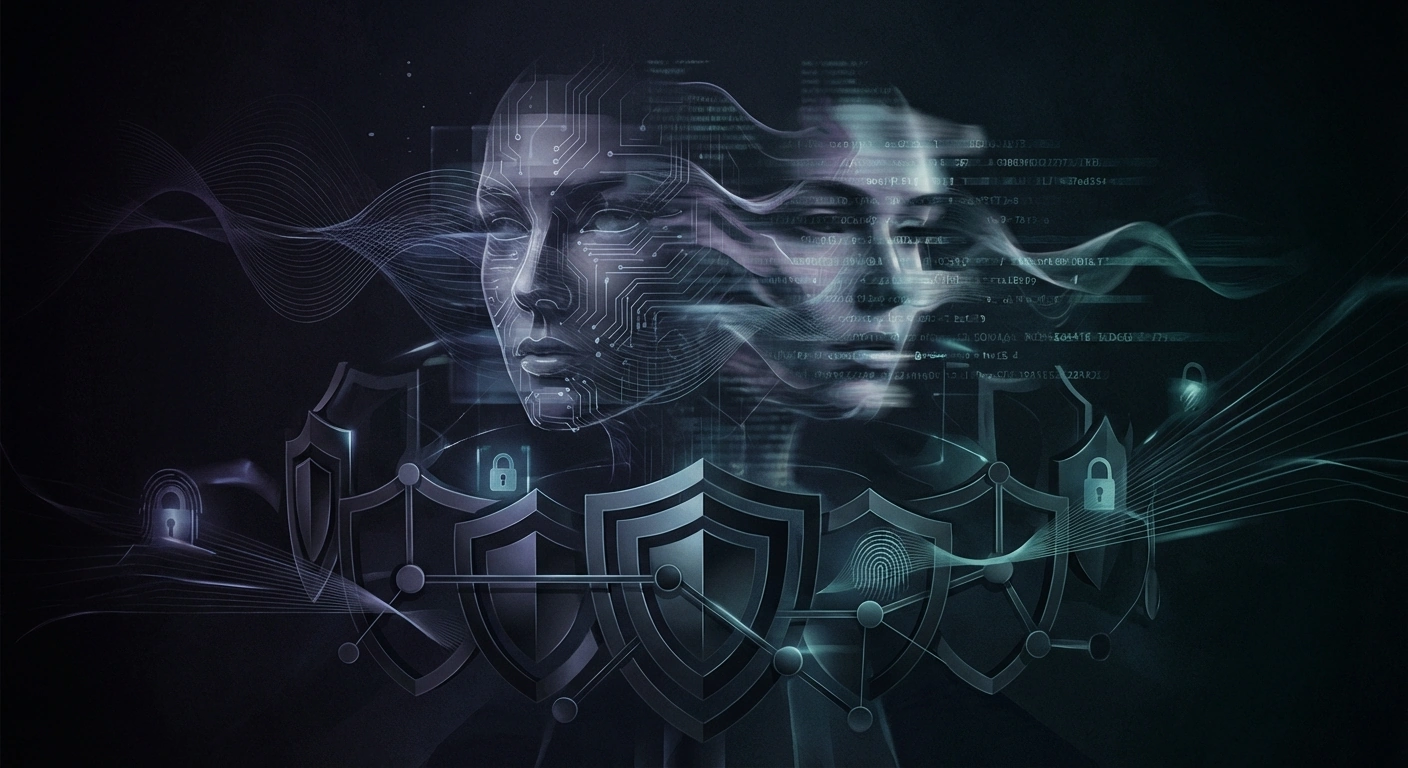
As deepfake cyberattacks grow more sophisticated, security experts argue that traditional perimeter defenses are insufficient. A trust-centric approach may offer better protection against AI-generated threats.

The cybersecurity landscape is undergoing a fundamental transformation as deepfake technology becomes an increasingly potent weapon in the attacker's arsenal. Traditional security perimeters—firewalls, endpoint protection, and network monitoring—were designed for an era when threats could be identified by signatures, behavioral patterns, or known vulnerabilities. But deepfakes represent something entirely different: attacks that exploit human trust itself.
The Deepfake Threat Evolution
Deepfake-powered cyberattacks have moved far beyond the realm of viral entertainment videos. Today's threat actors leverage sophisticated AI-generated content to execute highly targeted social engineering attacks, business email compromise (BEC) schemes, and real-time voice and video impersonation during calls with executives and financial officers.
The numbers are staggering. Recent incidents have seen companies lose millions of dollars to deepfake-enabled fraud, where attackers used synthesized audio or video of C-suite executives to authorize fraudulent wire transfers. In one notable case, a finance worker was convinced to transfer $25 million after participating in a video call where every other participant was an AI-generated deepfake impersonation of real colleagues.
Why Traditional Security Fails
Conventional cybersecurity operates on a fundamental assumption: that threats can be detected through technical means. Malware has signatures. Phishing emails have telltale signs. Unauthorized access creates logs. But deepfakes attack the human layer—the person making the decision to trust what they see and hear.
The challenge is multifaceted:
First, deepfake quality continues to improve exponentially. What required Hollywood-level resources five years ago can now be accomplished with consumer-grade hardware and freely available tools. Real-time deepfake generation has crossed the uncanny valley for many practical purposes.
Second, deepfakes don't trigger traditional security alerts. A video call appears legitimate. An audio message sounds authentic. There's no malicious payload to detect, no anomalous network traffic to flag.
Third, the attacks target moments of high cognitive load—urgent requests, time-sensitive decisions, scenarios where normal verification procedures seem impractical.
Trust as the New Security Perimeter
Security experts are now advocating for a paradigm shift: treating trust verification as the primary security perimeter rather than an afterthought. This approach recognizes that in an age of synthetic media, seeing is no longer believing.
Multi-Factor Authentication for Identity
Just as we've adopted multi-factor authentication for system access, organizations must implement multi-channel verification for high-stakes communications. A video call requesting a wire transfer should trigger out-of-band confirmation through separate, pre-established channels. No single mode of communication—regardless of how convincing—should be sufficient for critical decisions.
Technical Detection Layers
While detection alone isn't sufficient, it remains a crucial component of defense-in-depth strategies. Modern deepfake detection systems analyze multiple signals: subtle inconsistencies in lighting and shadow, unnatural micro-expressions, audio artifacts, and temporal inconsistencies between video and audio streams.
Enterprise solutions are now integrating real-time deepfake detection into video conferencing platforms, providing visual indicators when synthetic content is suspected. These systems use trained neural networks that identify telltale signs of AI generation—though the cat-and-mouse game between generators and detectors continues.
Organizational Culture and Training
Perhaps most critically, organizations must cultivate a culture where verification is normalized, not stigmatized. Employees should feel empowered—even encouraged—to verify requests through secondary channels without fear of appearing paranoid or insubordinate.
Regular training that includes exposure to realistic deepfake examples helps calibrate employee awareness. When people understand both the capabilities and limitations of current synthetic media technology, they're better equipped to maintain appropriate skepticism.
The Technical Response: Authentication at the Source
A more fundamental solution involves authenticating content at the point of creation rather than attempting to detect manipulation after the fact. Initiatives like the Coalition for Content Provenance and Authenticity (C2PA) are developing technical standards for cryptographic content authentication.
These approaches embed verifiable metadata into media files at capture time, creating an unbroken chain of provenance. While adoption remains limited, enterprise video conferencing and communication platforms are beginning to explore integration of such verification mechanisms.
Looking Forward
The deepfake threat will only intensify as generation technology becomes more accessible and output quality improves. Organizations that wait for perfect detection solutions before acting will find themselves perpetually vulnerable.
The most resilient approach combines technical detection capabilities with robust verification procedures and organizational cultures that treat trust as something to be earned through multiple channels—never assumed based on sensory perception alone. In this new landscape, paranoia isn't just prudent; it's essential security hygiene.
Stay informed on AI video and digital authenticity. Follow Skrew AI News.