Sakana AI
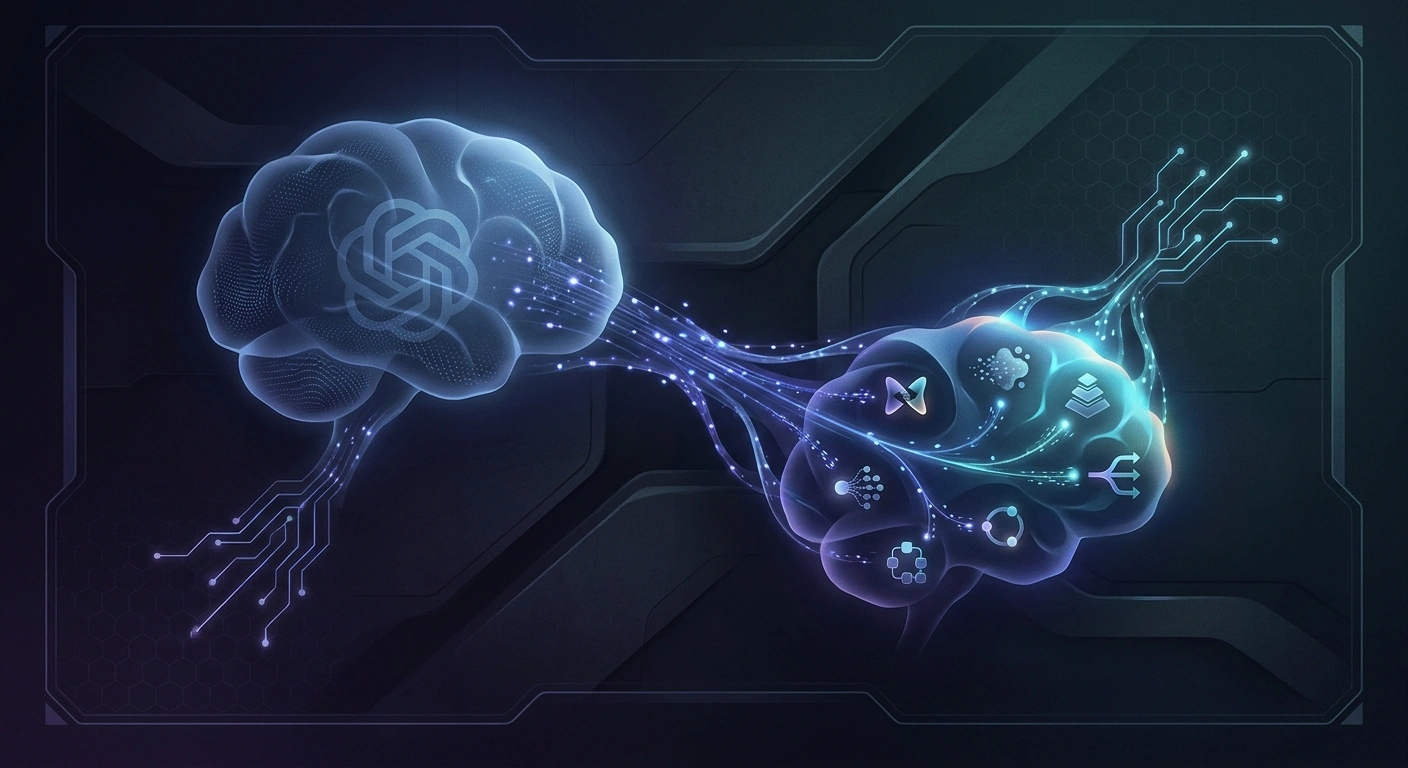
Sakana AI's DiffusionBlocks Rethinks Neural Net Training
Sakana AI's DiffusionBlocks reframes residual network training as independent denoising tasks, eliminating end-to-end backprop and slashing memory costs for large generative models.
Sakana AI
Sakana AI's DiffusionBlocks reframes residual network training as independent denoising tasks, eliminating end-to-end backprop and slashing memory costs for large generative models.
transfer learning
Training generative models typically demands massive datasets, but transfer learning offers a path forward with limited data. Here are six proven techniques researchers use to fine-tune GANs and diffusion models efficiently when training samples are scarce.
diffusion models
A new measure-theoretic framework unifies diffusion, score-based, and flow matching generative models — the mathematical backbone of modern AI video and image synthesis systems.
diffusion models
New research proposes MCLR, a training-time method that maximizes inter-class likelihood ratios to improve conditional visual generation, proving formal equivalence between classifier-free guidance and alignment objectives like DPO.
research
New research combines StyleGAN and diffusion models to generate high-quality visual counterfactual explanations, advancing explainable AI while revealing techniques applicable to synthetic media generation.
multimodal AI
From diffusion models to vision-language transformers, understanding the seven architectural approaches behind modern AI image generation and cross-modal synthesis.
AI Safety
New research introduces Constricting Barrier Functions for mathematically guaranteed safe outputs from generative AI models, offering formal safety proofs for controlled content generation.
AI Video Generation
New research breaks the resolution barrier in generative game engines through innovative hardware-algorithm co-design, enabling real-time high-resolution AI video synthesis for interactive applications.
LLM Inference
New research introduces DART, a speculative decoding method that borrows denoising concepts from diffusion models to dramatically accelerate large language model inference without sacrificing output quality.
AI Security
New research reveals three classes of inference attacks against graph generative diffusion models, exposing membership inference, property inference, and data reconstruction vulnerabilities in AI generation systems.
diffusion models
Researchers propose coarse-grained Kullback-Leibler control for diffusion models, enabling more efficient guidance without full distribution knowledge. The method could improve AI image and video generation quality.
diffusion models
New research applies quantum physics path integral methods to understand dissipative dynamics in generative AI, offering theoretical foundations for diffusion models powering modern image and video synthesis.