SoftBank Bets $52B on AI Data Centers Across France
SoftBank plans a $52 billion AI data center network in France, a major bet on European compute infrastructure that could reshape access to GPUs for generative video and synthetic media workloads.
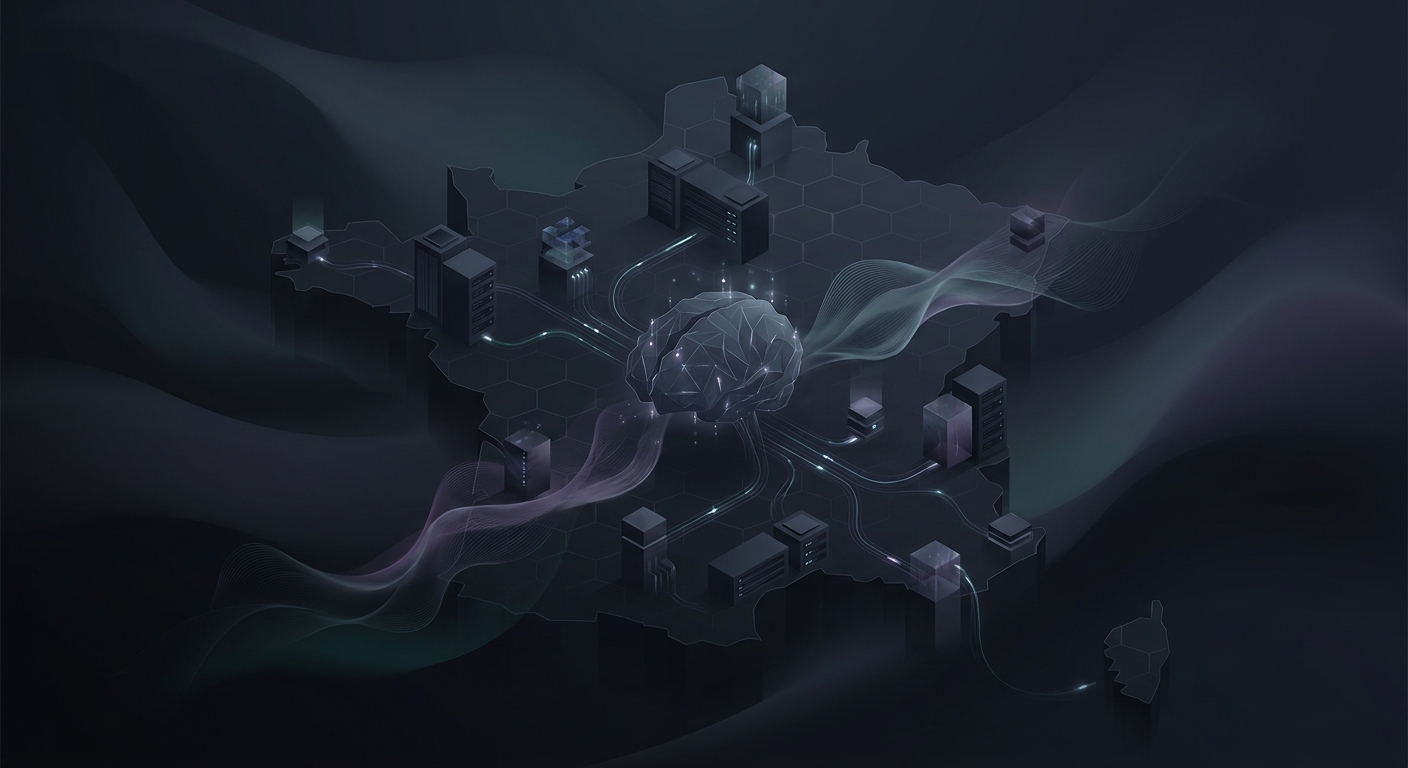
SoftBank Group is preparing one of the largest single AI infrastructure commitments ever announced in Europe: a reported $52 billion investment to build a network of AI data centers across France. The move signals that Masayoshi Son's accelerating bet on AI compute — already visible through SoftBank's deepening ties with OpenAI, Arm, and the Stargate initiative in the United States — is now extending into the European market in a serious way.
Why France, and Why Now
France has quietly emerged as continental Europe's most aggressive AI hub. The country offers a rare combination of factors that matter enormously for hyperscale AI buildouts: abundant low-carbon nuclear electricity, an established grid capable of supporting gigawatt-class loads, government incentives tied to President Macron's "Choose France" agenda, and a growing concentration of AI talent around Mistral, Hugging Face, Kyutai, and Poolside.
Power, more than land or chips, has become the binding constraint on frontier AI. Training runs for state-of-the-art video and multimodal models routinely consume tens of megawatts continuously for months. By anchoring in France, SoftBank gains access to baseload nuclear capacity that is increasingly difficult to secure in the U.S., Ireland, or the Netherlands, where grid moratoria and water-use restrictions have stalled hyperscale projects.
What $52 Billion Actually Buys
At current build costs of roughly $30–50 million per megawatt for AI-optimized facilities — inclusive of liquid cooling, high-density racks, and Nvidia GB200-class systems — a $52 billion outlay could fund somewhere between 1 and 1.7 gigawatts of AI compute capacity, depending on how much of the spend goes to GPUs versus shell construction. That would place SoftBank's French footprint in the same order of magnitude as Microsoft's largest U.S. campuses and well above any existing European AI cluster.
The investment also fits a pattern. SoftBank has been positioning itself as the capital backbone of the next AI cycle: the Stargate joint venture with OpenAI and Oracle targets $500 billion in U.S. data centers, and SoftBank has separately committed tens of billions in direct OpenAI equity. A French network would give the group a sovereign-friendly European leg, useful both for serving EU customers under data-residency rules and for hedging geopolitical exposure.
Implications for Generative Video and Synthetic Media
For the AI video and synthetic media ecosystem, infrastructure of this scale matters more than it might appear. Today's leading video generators — Sora, Veo 3, Runway Gen-4, Kling, and open-weight systems like Wan and HunyuanVideo — are extraordinarily compute-hungry. A single minute of high-resolution generated video can require GPU-hours equivalent to thousands of LLM prompts. Inference, not just training, is becoming the dominant cost driver.
European video model developers and post-production studios have so far been forced to rent capacity from U.S. hyperscalers, often with latency, cost, and compliance friction. A SoftBank-backed French network could:
- Lower the cost floor for European-trained video and audio foundation models, including Mistral's multimodal roadmap and Kyutai's real-time voice work.
- Provide compliant compute for content provenance and authenticity systems that need to process media within EU jurisdictions under the AI Act.
- Enable larger-context video diffusion training runs that today are bottlenecked by available H100/B200 clusters.
Strategic Read
The announcement should also be read against the EU AI Act, which entered key compliance phases this year. General-purpose AI models trained above certain compute thresholds face transparency, copyright, and systemic-risk obligations. Hosting that training inside the EU — on infrastructure with clear ownership and energy provenance — becomes a strategic asset rather than just a cost center.
For SoftBank, the French buildout extends a thesis that has crystallized over the past 18 months: that the largest returns in AI will accrue not only to model labs but to whoever controls the silicon, the power contracts, and the buildings. With Arm supplying CPU IP, OpenAI supplying frontier models, and a growing global data center footprint supplying the substrate, the conglomerate is constructing what amounts to a vertically integrated AI utility.
Execution risk remains substantial. $52 billion is a multi-year commitment, contingent on power agreements, GPU allocation from Nvidia, and regulatory approvals. But if even half of it lands, France's role in the generative media stack — and Europe's ability to host its own video and synthetic content models at scale — shifts meaningfully.
Stay informed on AI video and digital authenticity. Follow Skrew AI News.