The Rise of Cryptographically Attested AI Systems
Cryptographic attestation is emerging as a foundational layer for AI trust, letting systems prove where models run, what code executed, and whether outputs are authentic—with major implications for synthetic media provenance.
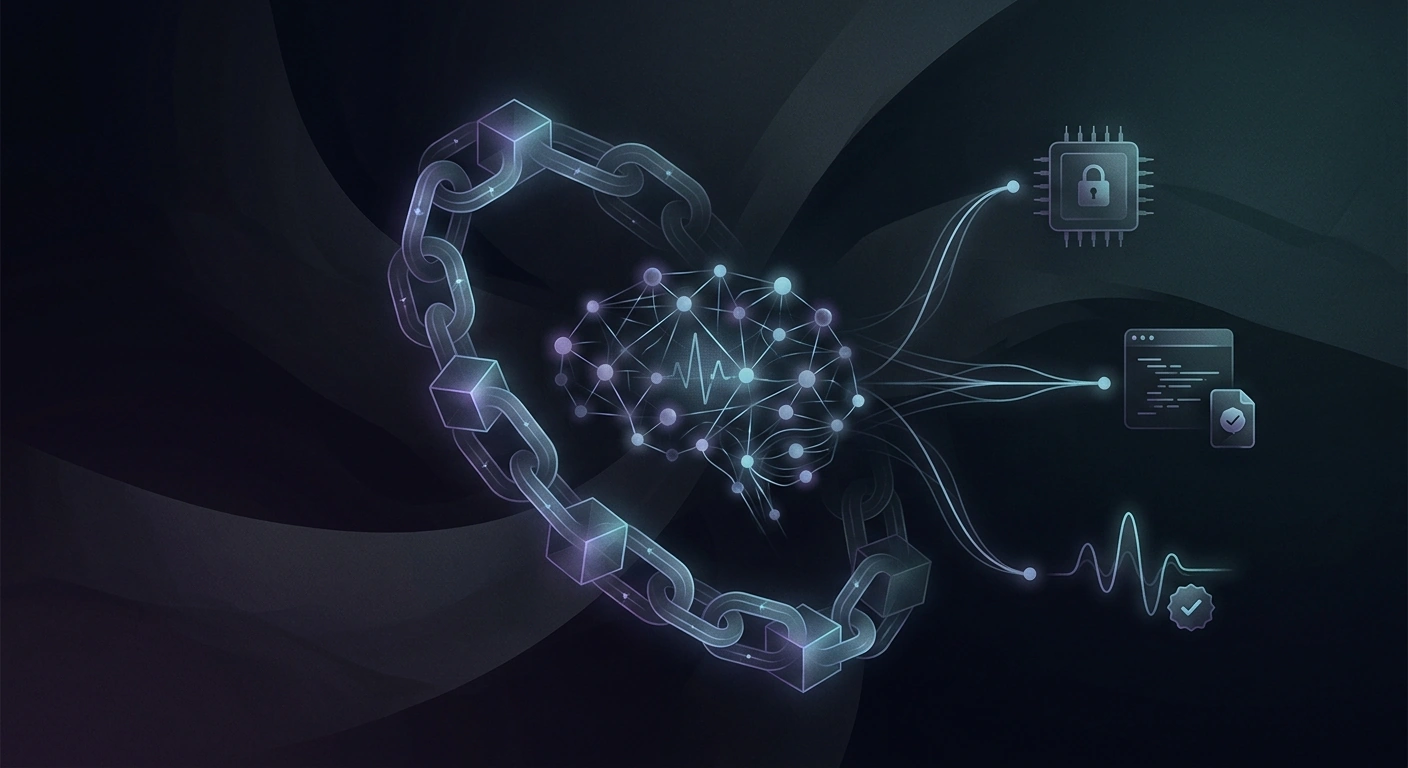
As generative AI floods the internet with synthetic text, images, audio, and video, one question keeps surfacing: how do we know what to trust? A growing movement toward cryptographically attested AI aims to answer that by embedding verifiable proofs directly into the machinery that runs models and produces outputs. Rather than relying on reputation or after-the-fact detection, attestation lets a system prove—mathematically and hardware-backed—exactly what code executed, on what data, and under what conditions.
What Cryptographic Attestation Actually Means
Attestation is a security concept borrowed from confidential computing. At its core, it produces a signed, tamper-evident statement about the state of a system. In the AI context, this can cover several distinct claims:
- Model identity: proof that a specific model checkpoint (identified by a cryptographic hash of its weights) was the one actually used to generate an output.
- Execution environment: proof that inference ran inside a trusted execution environment (TEE) such as Intel TDX, AMD SEV-SNP, or NVIDIA's confidential computing on Hopper and Blackwell GPUs.
- Input and output integrity: proof that prompts and generated artifacts were not tampered with between production and delivery.
The mechanism typically relies on a hardware root of trust. A secure enclave measures the code and data loaded into it, then signs those measurements with a key that never leaves the silicon. A remote party can verify that signature against the hardware vendor's certificate chain—establishing trust without ever seeing the raw computation.
Why This Matters for Synthetic Media
For anyone tracking deepfakes and synthetic media, attestation is a natural complement to content provenance standards like C2PA and the Content Authenticity Initiative. Those standards attach signed metadata describing how a piece of media was created. But metadata alone can be stripped or forged. Cryptographic attestation strengthens the chain by binding provenance claims to a verifiable execution environment.
Imagine a generative video pipeline where every clip carries a proof that it was produced by a known model version, running in an attested enclave, with a logged prompt. Downstream platforms could verify that proof automatically before publishing, and viewers could inspect it. This flips the current paradigm: instead of trying to detect synthetic content after the fact—an arms race detectors are steadily losing—systems could prove authenticity at the point of creation.
The same logic applies in reverse. Cameras and capture devices with hardware attestation can sign real footage at the sensor level, creating a verifiable trail that distinguishes genuine recordings from AI-generated fabrications. Combined, these approaches point toward an ecosystem where trust is cryptographic rather than perceptual.
The Confidential Computing Foundation
Much of this rests on advances in confidential computing hardware. NVIDIA's confidential computing for GPUs extends the enclave model to accelerated workloads, meaning large models can run with their execution attested end to end. This is significant because attestation historically stopped at the CPU boundary—leaving GPU-heavy AI inference outside the trust boundary. Closing that gap makes attested inference practical at scale.
Emerging startups and protocols are layering on top of this, offering attested inference as a service and even exploring zero-knowledge proofs of model execution. Zero-knowledge machine learning (zkML) is a more ambitious approach: it produces a succinct proof that a computation was performed correctly, without requiring trust in any hardware vendor at all. zkML remains computationally expensive for large models, but it represents the long-term ideal of trustless verification.
Challenges and Open Questions
Attestation is not a silver bullet. It proves that a specific model ran—but says nothing about whether that model is safe, unbiased, or truthful. A perfectly attested pipeline can still generate convincing disinformation if the operator intends it to. The technology verifies process, not intent or content quality.
There are also practical hurdles: verifier infrastructure must be widely deployed, hardware vendors become trust anchors (a centralization concern), and performance overhead remains non-trivial. Interoperability between attestation schemes and provenance standards is still maturing.
Still, the trajectory is clear. As AI-generated content becomes indistinguishable from human-made media, the ability to prove origin and integrity may become as fundamental as HTTPS is to the web today. Cryptographically attested AI won't end deepfakes—but it offers a rigorous foundation for rebuilding trust in a synthetic-saturated information landscape.
Stay informed on AI video and digital authenticity. Follow Skrew AI News.