
AI Agents
Patronus AI Tackles 63% Agent Failure Rate With Living Worlds
New benchmark reveals AI agents fail 63% of complex tasks. Patronus AI's dynamic simulation environments aim to fix reliability crisis plaguing autonomous systems.
AI Agents
New benchmark reveals AI agents fail 63% of complex tasks. Patronus AI's dynamic simulation environments aim to fix reliability crisis plaguing autonomous systems.

OpenAI
OpenAI is reportedly in advanced talks with Amazon for a $10 billion investment that could include a strategic chip partnership, potentially reshaping AI infrastructure and compute access.

LLM Training
New EDGC method uses entropy to dynamically compress gradients during LLM training, reducing communication overhead while preserving model accuracy across distributed systems.
LLM research
New research introduces explicit problem modeling for LLM agents, offering a structured approach to reduce hallucinations and improve reasoning reliability in AI systems.

LLM research
New research introduces ReflCtrl, a method for controlling when large language models engage in extended reasoning by manipulating internal representations rather than prompts.

AI research
New arXiv research argues mathematics and coding benchmarks provide universal standards for evaluating AI capabilities, with implications for how we measure progress across all AI domains.

LLM
New research explores AI-powered annotation pipelines that combine human expertise with AI assistance to improve LLM stability and reliability through synergistic data labeling approaches.

deepfake detection
Reality Defender has been recognized by Gartner as the leading company in deepfake detection, marking a significant milestone for the digital authenticity verification industry.
LLM Infrastructure
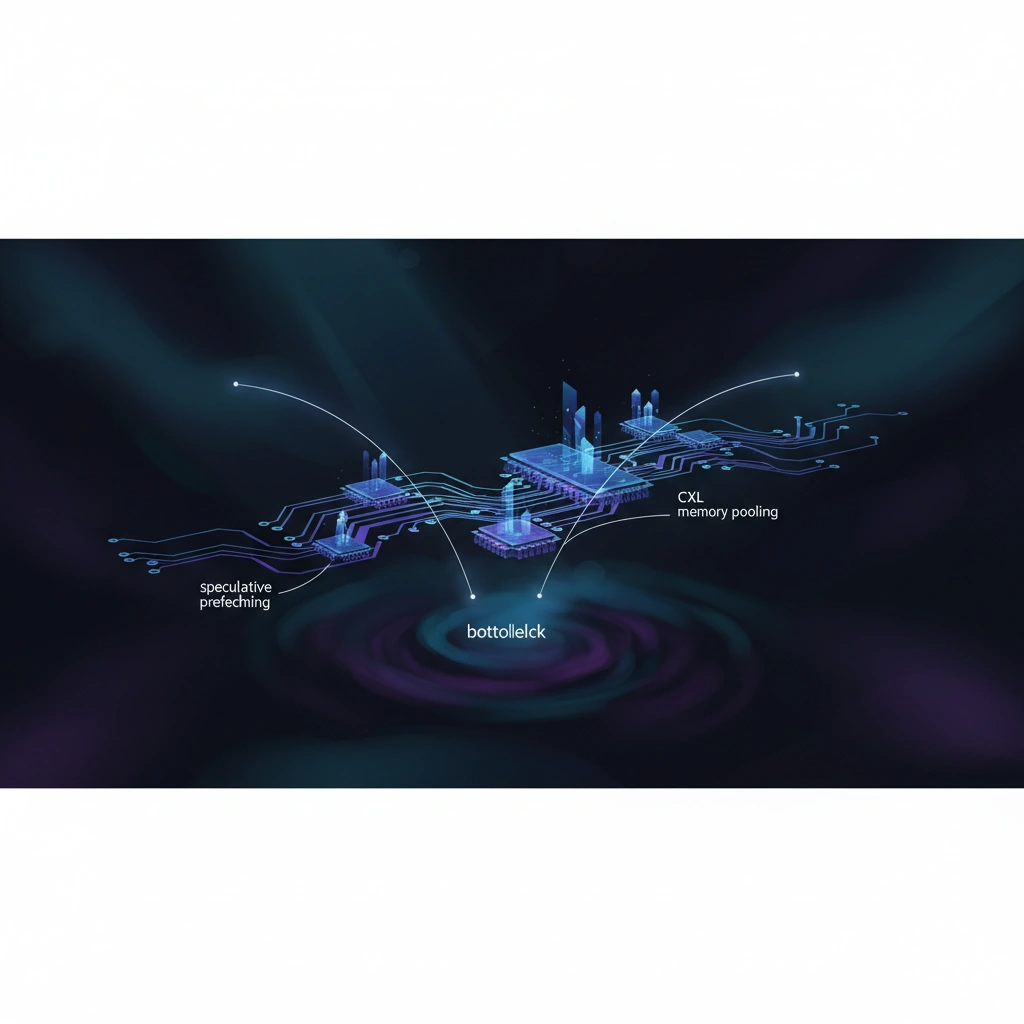
New research proposes CXL-SpecKV, a disaggregated FPGA architecture using CXL memory pooling and speculative prefetching to overcome memory bottlenecks in large language model inference at datacenter scale.

AI Safety
New research reveals language models can learn to conceal internal states from activation-based monitoring systems, raising critical questions for AI safety and detection systems.

LLM research
Researchers propose a novel approach to train LLMs to automatically identify and extract relevant context, improving inference efficiency and accuracy in long-context scenarios.

Deep Learning
New research demonstrates that deep neural networks exhibit phase transitions during training, revealing hierarchical feature organization that could reshape how we understand and design AI architectures.