Latent Space Explained: The Engine of Synthetic Media
Latent space is the mathematical foundation behind generative models that power deepfakes, face swaps, and AI video. Here's how these compressed representations enable realistic synthetic media generation and manipulation.
Behind every convincing deepfake, AI-generated portrait, or synthesized voice lies a mathematical construct known as latent space. It is one of the most important yet under-appreciated concepts in modern generative AI, and understanding it demystifies how machines can create, edit, and manipulate media that looks strikingly real. A recent explainer from Machine Learning Mastery breaks down the role latent space plays across machine learning models, and its implications reach directly into the world of synthetic media.
What Is Latent Space?
Latent space refers to a compressed, lower-dimensional representation of data that a model learns during training. Rather than working with raw pixels or audio samples, a neural network maps its inputs into an abstract mathematical space where each point encodes the essential features of the data. In this space, semantically similar items sit close together, while dissimilar ones are far apart.
Think of a dataset of human faces. In pixel space, a face might be represented by hundreds of thousands of values. In latent space, that same face may be captured by just a few hundred numbers — each corresponding to abstract features like age, expression, lighting, or head pose. The model discovers these dimensions on its own; they are not hand-labeled but emerge from the structure of the data.
Why Latent Space Matters for Generative Models
The real power of latent space becomes clear in generative models. Autoencoders and variational autoencoders (VAEs) explicitly compress data into a latent representation and then reconstruct it. Generative adversarial networks (GANs) sample points from a latent distribution and transform them into new, synthetic outputs. Diffusion models — the technology behind many state-of-the-art image and video generators — increasingly operate in latent space rather than pixel space, which is precisely what makes tools like Stable Diffusion computationally efficient.
Because latent space is continuous and smooth, you can navigate it in meaningful ways. Moving along a specific direction might make a generated face appear older, add a smile, or rotate the head. This property, known as latent space interpolation, is the mathematical mechanism that enables seamless face morphing and the gradual transformation of one identity into another.
The Connection to Deepfakes and Face Swapping
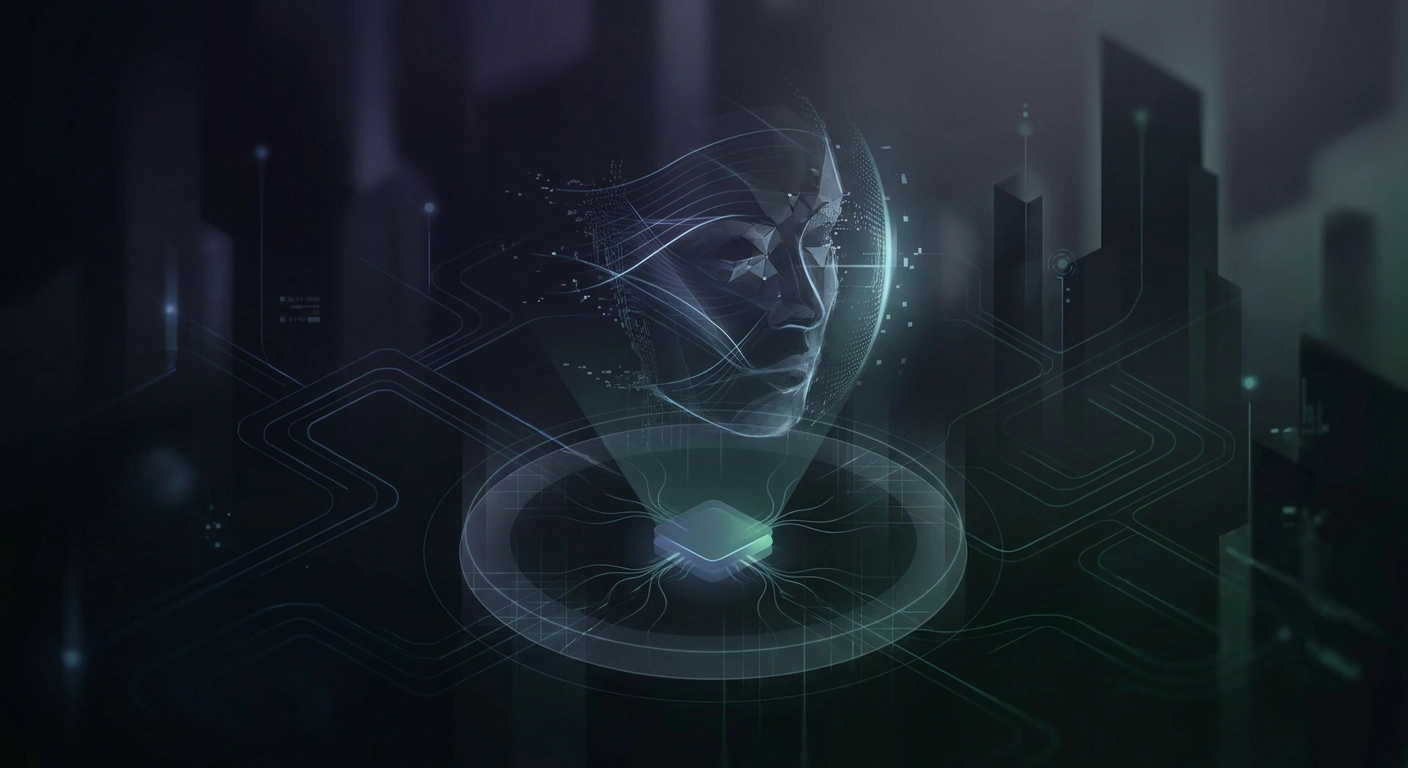
Face-swapping systems rely heavily on encoding faces into a shared latent representation. A model learns to compress two different identities into the same latent space, then decodes them with identity-specific decoders. By encoding a source face and decoding it with a target's decoder, the system transfers expressions and movements while swapping identity — the core trick behind modern deepfakes.
Voice cloning follows a parallel logic. Speaker characteristics are captured as embeddings — points in a latent space of voices — that can be combined with linguistic content to synthesize speech in someone's voice. The same principle underlies AI video generation, where temporal and spatial features are jointly encoded to produce coherent motion.
Latent Space and Digital Authenticity
Understanding latent space is not only useful for creating synthetic media — it is central to detecting it. Many deepfake detection methods work by analyzing artifacts introduced during the encoding and decoding process. Because generative models compress data into a lower-dimensional manifold and then reconstruct it, subtle statistical inconsistencies can leak into the output. Detectors trained to recognize these latent-space fingerprints can flag manipulated content that appears flawless to the human eye.
Researchers also study whether generated media clusters differently from authentic media in feature space, using that separation as a signal for authenticity verification. As generative models improve and their latent representations become richer, this cat-and-mouse dynamic between synthesis and detection intensifies.
Why This Concept Is Foundational
For anyone tracking AI video, deepfakes, and synthetic media, latent space is the conceptual backbone that ties together GANs, VAEs, diffusion models, embedding-based voice cloning, and detection research. Grasping how models compress reality into these abstract representations — and how they navigate and reconstruct from them — clarifies both the creative potential and the authenticity risks of generative AI.
As synthetic media tools become more accessible, literacy in these underlying mechanisms is increasingly valuable. The same latent representations that empower creative applications also enable the most convincing forms of digital deception, making this a concept worth understanding for technologists and content authenticity advocates alike.
Stay informed on AI video and digital authenticity. Follow Skrew AI News.