Injection Attacks: The Deepfake Threat Behind the Camera
Injection attacks bypass a device's camera entirely, feeding synthetic deepfake video directly into verification systems. As these attacks scale in 2026, biometric and identity platforms face a fundamentally harder detection challenge.
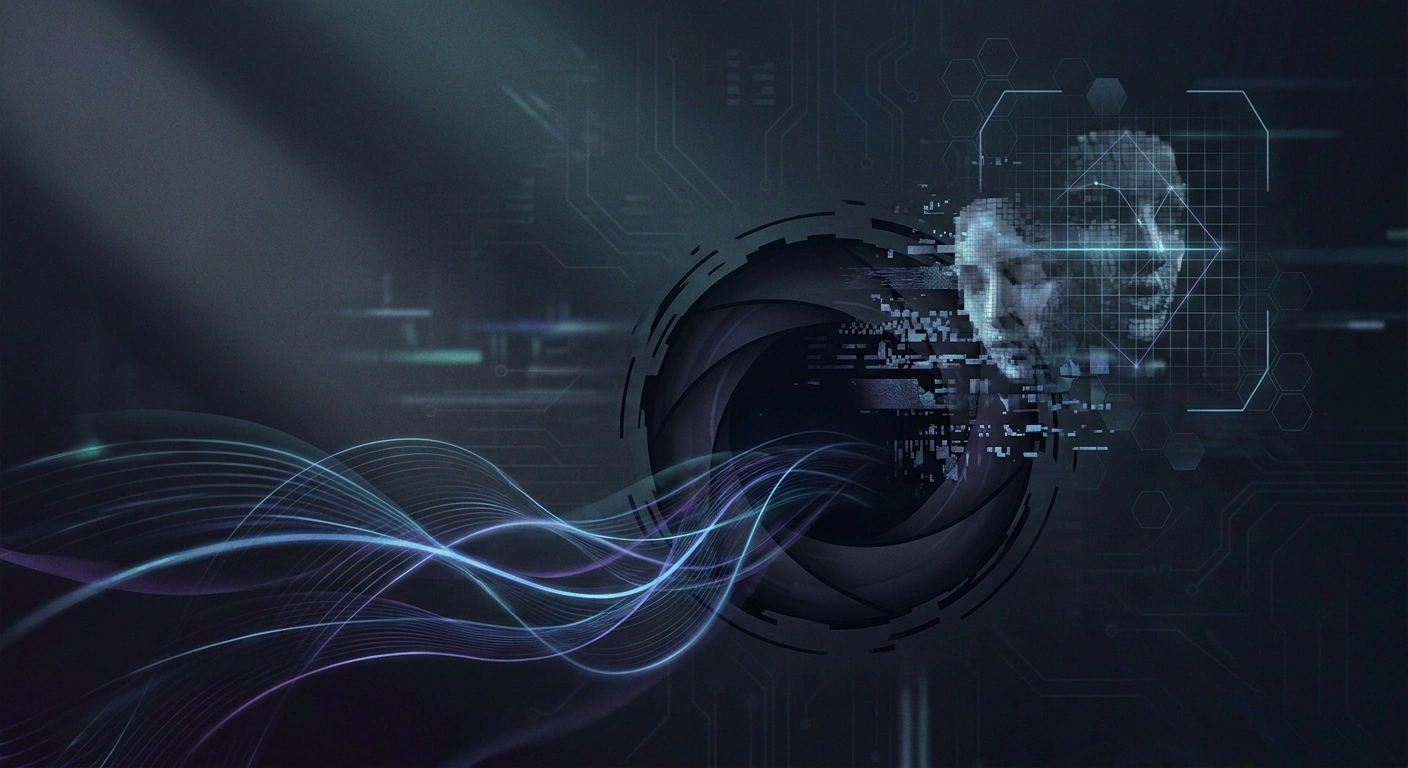
For years, the dominant fear around deepfakes centered on what appears in front of a camera — a synthetic face shown on a screen, a printed photo held up to a lens, or a manipulated video played back during a verification check. These are known as presentation attacks, and the security industry has spent considerable effort building liveness detection to catch them. But a more insidious threat is now dominating the conversation heading into 2026: the injection attack, which bypasses the camera entirely.
What Is an Injection Attack?
An injection attack occurs when a malicious actor feeds a synthetic video or image stream directly into an application's data pipeline, circumventing the physical camera hardware altogether. Instead of holding a deepfake up to a phone's front-facing camera, the attacker replaces the camera's output with an AI-generated feed at the software or driver level.
The practical tools for this already exist and are widely accessible. Virtual camera software — originally built for streamers and video conferencing — can present a synthetic feed to any application as if it were a legitimate webcam. Combine that with real-time face-swapping models and generative video tools, and an attacker can inject a fully synthetic, live-appearing person into a Know Your Customer (KYC) onboarding flow, a bank's identity verification step, or a remote authentication session.
Why Injection Attacks Are Harder to Stop
The critical distinction is this: presentation attacks have physical tells. When a deepfake is shown on a screen and captured by a real camera, artifacts appear — screen glare, moiré patterns, pixel structure, reflections, and depth inconsistencies. Liveness detection algorithms are trained to spot exactly these anomalies.
Injection attacks eliminate that entire layer of physical evidence. Because the synthetic stream never passes through a real lens, there is no glare, no moiré, no screen bezel to detect. The video arrives at the application looking like a clean, first-generation capture. This forces detection systems to rely on far more subtle signals: temporal inconsistencies in the generated frames, unnatural lighting physics, micro-expression irregularities, or metadata forensics about the device and camera provenance.
According to fraud researchers tracking this trend, injection attacks are growing dramatically faster than traditional presentation attacks. As real-time deepfake generation becomes cheaper and more convincing, the barrier to launching one has collapsed from specialist expertise to off-the-shelf software.
The Technical Defense Landscape
Defending against injection attacks requires a fundamentally different approach than screen-based liveness checks. Several strategies are emerging:
Device and camera integrity verification
Rather than analyzing only the image, systems are increasingly validating the source of the video. This includes detecting the presence of virtual camera drivers, checking for emulators, verifying hardware attestation signals, and confirming that the feed originates from a genuine, physically-present sensor. Secure hardware pathways — where the camera signal is cryptographically signed at the sensor level — represent one of the most robust long-term defenses.
Injection-specific artifact analysis
Generative models still leave fingerprints. Frame-to-frame temporal coherence errors, inconsistent noise patterns, and physically implausible lighting all provide detectable signals. Detection models trained specifically on injected synthetic streams — rather than screen-captured deepfakes — perform meaningfully better against this attack class.
Behavioral and challenge-response methods
Active liveness challenges that ask users to perform unpredictable actions in real time can strain the responsiveness of a synthetic pipeline. If the deepfake generation cannot keep pace with a randomized prompt, latency and rendering artifacts expose the manipulation.
Why This Matters for Digital Authenticity
The rise of injection attacks marks a shift in the deepfake threat model that extends well beyond entertainment or misinformation. It strikes directly at the systems businesses use to establish trust: financial onboarding, remote identity proofing, account recovery, and any workflow that assumes a camera feed reflects physical reality.
For the digital authenticity ecosystem, the lesson is that content-level detection alone is insufficient. The industry must build layered defenses that combine synthetic-media forensics with provenance and hardware attestation. As generative video quality continues to climb, the question is no longer whether a deepfake looks real — it's whether the system can prove where the video actually came from.
Heading into 2026, injection attacks are poised to become the defining battleground for biometric security and remote identity verification. Organizations that still rely solely on screen-based liveness detection are defending against yesterday's threat while attackers have already moved behind the camera.
Stay informed on AI video and digital authenticity. Follow Skrew AI News.