Docker's MCP Toolkit: Infrastructure for AI Agents
Docker launches MCP toolkit providing standardized infrastructure for AI agents to access tools and services. Technical deep dive into protocol design, integration patterns, and the future of agentic AI ecosystems.
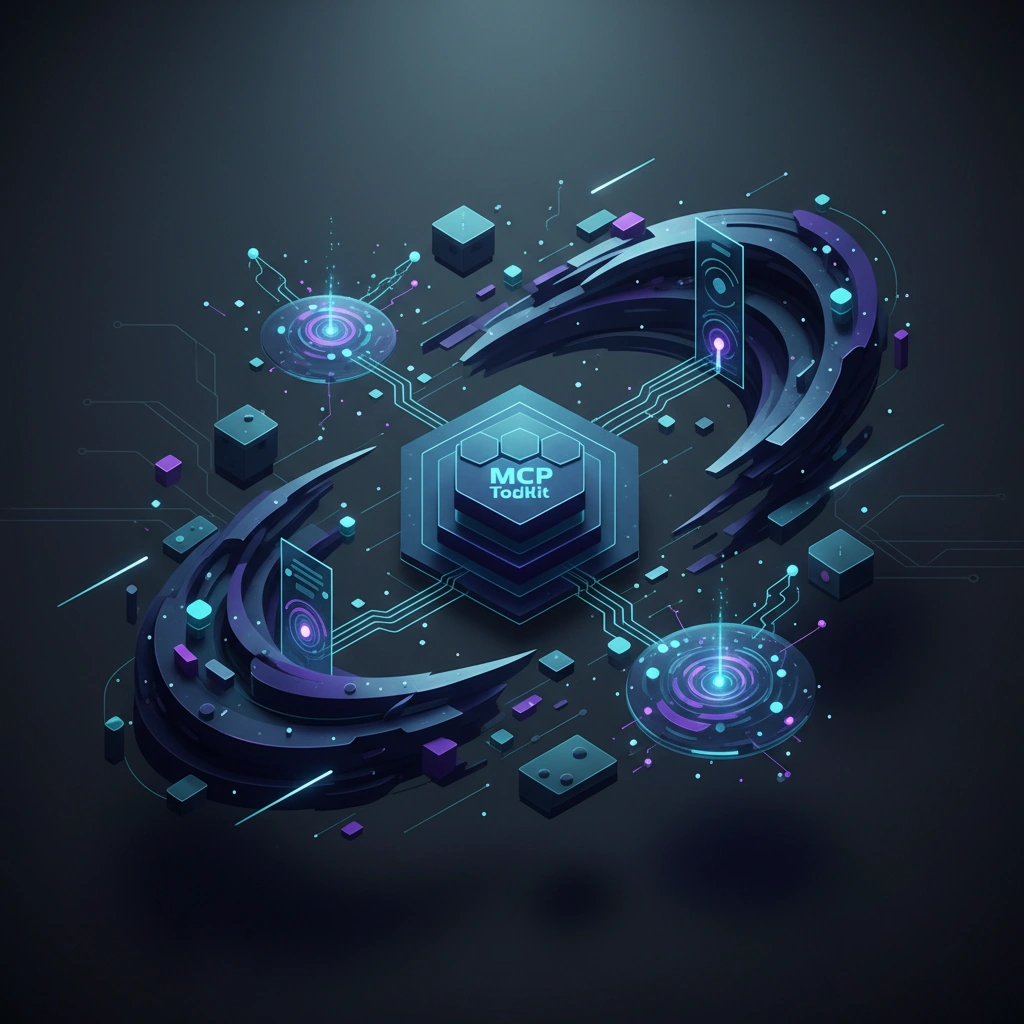
Docker has entered the AI agent infrastructure space with its Model Context Protocol (MCP) toolkit, positioning itself as a standardized platform for connecting AI agents to real-world tools and services. This development addresses one of the fundamental challenges in agentic AI: creating reliable, scalable interfaces between language models and the external capabilities they need to execute tasks.
The Model Context Protocol Framework
The Model Context Protocol represents a significant step toward standardizing how AI agents interact with external tools and data sources. Unlike proprietary solutions that lock agents into specific ecosystems, MCP provides an open specification that allows any AI system to discover, authenticate with, and utilize compatible services.
At its core, MCP defines a structured communication layer between AI agents and tool providers. The protocol handles critical functions including capability discovery, authentication, request formatting, and response parsing. This abstraction layer means developers can build agents that work across multiple tool providers without writing custom integration code for each service.
Technical Architecture and Implementation
Docker's MCP toolkit implements a containerized approach to tool deployment. Each MCP-compatible tool runs in its own isolated container, exposing a standardized API endpoint that agents can query. This architecture provides several technical advantages:
First, containerization ensures consistent execution environments regardless of the underlying infrastructure. Tools behave predictably whether running locally, on-premises, or in cloud environments. Second, the isolation model enhances security by limiting the scope of potential vulnerabilities within individual containers.
The toolkit includes client libraries for major programming languages, enabling developers to quickly integrate MCP support into existing agent frameworks. These libraries handle the low-level protocol details, including JSON-RPC message formatting, connection management, and error handling.
Tool Discovery and Composition
One of MCP's most powerful features is its dynamic tool discovery mechanism. Rather than hardcoding available capabilities, agents can query MCP servers to understand what tools are available and how to use them. Each tool publishes a schema describing its inputs, outputs, and operational constraints.
This enables sophisticated tool composition patterns where agents chain multiple tools together to accomplish complex tasks. For example, an agent might discover a web scraping tool, a data analysis tool, and a visualization tool, then orchestrate them to generate a market research report.
The protocol supports both synchronous and asynchronous operations, allowing tools to handle long-running processes without blocking agent execution. Tools can emit progress updates and partial results, giving agents visibility into ongoing operations.
Addressing AI Agent Efficiency
Docker's timing is strategic. Recent research has shown that AI agents waste significant compute resources on coordination overhead and redundant tool calls. MCP addresses this by providing efficient caching mechanisms and batched request support.
The protocol includes provisions for tools to declare their idempotency properties, allowing agents to safely retry failed operations. It also supports transaction-like semantics for operations that need to succeed or fail atomically across multiple tools.
Ecosystem and Integration Potential
The MCP toolkit's open specification has already attracted integration efforts from major AI platforms. The protocol's neutrality makes it attractive to organizations that want to avoid vendor lock-in while still providing their agents with rich tool ecosystems.
For organizations building internal AI agent systems, MCP offers a path to gradually expose existing services to agents without wholesale architectural changes. By wrapping legacy APIs in MCP-compatible containers, teams can make decades-old systems accessible to modern AI agents.
Implications for AI Development
The standardization effort represented by Docker's MCP toolkit could significantly accelerate AI agent deployment. Just as containerization revolutionized application deployment by providing consistent packaging and runtime environments, MCP could do the same for AI agent capabilities.
However, questions remain about how the protocol will handle nuanced requirements like real-time multimedia processing, streaming data analysis, or integration with specialized hardware. The toolkit's success will depend on whether it can balance standardization with the flexibility needed for cutting-edge AI applications.
For developers building AI agents, MCP represents both an opportunity and a potential shift in architecture. The protocol encourages designing agents that discover and compose capabilities dynamically rather than being built with hardcoded tool integrations. This could lead to more flexible, adaptable AI systems capable of evolving their capabilities without code changes.
Stay informed on AI video and digital authenticity. Follow Skrew AI News.