DeepMind Puts Real-Time Sign Language AI On-Device
Google DeepMind released SignGemma-powered tools that translate sign language into text in real time using on-device pose estimation and video recognition, marking a milestone for accessible AI-driven gesture understanding.
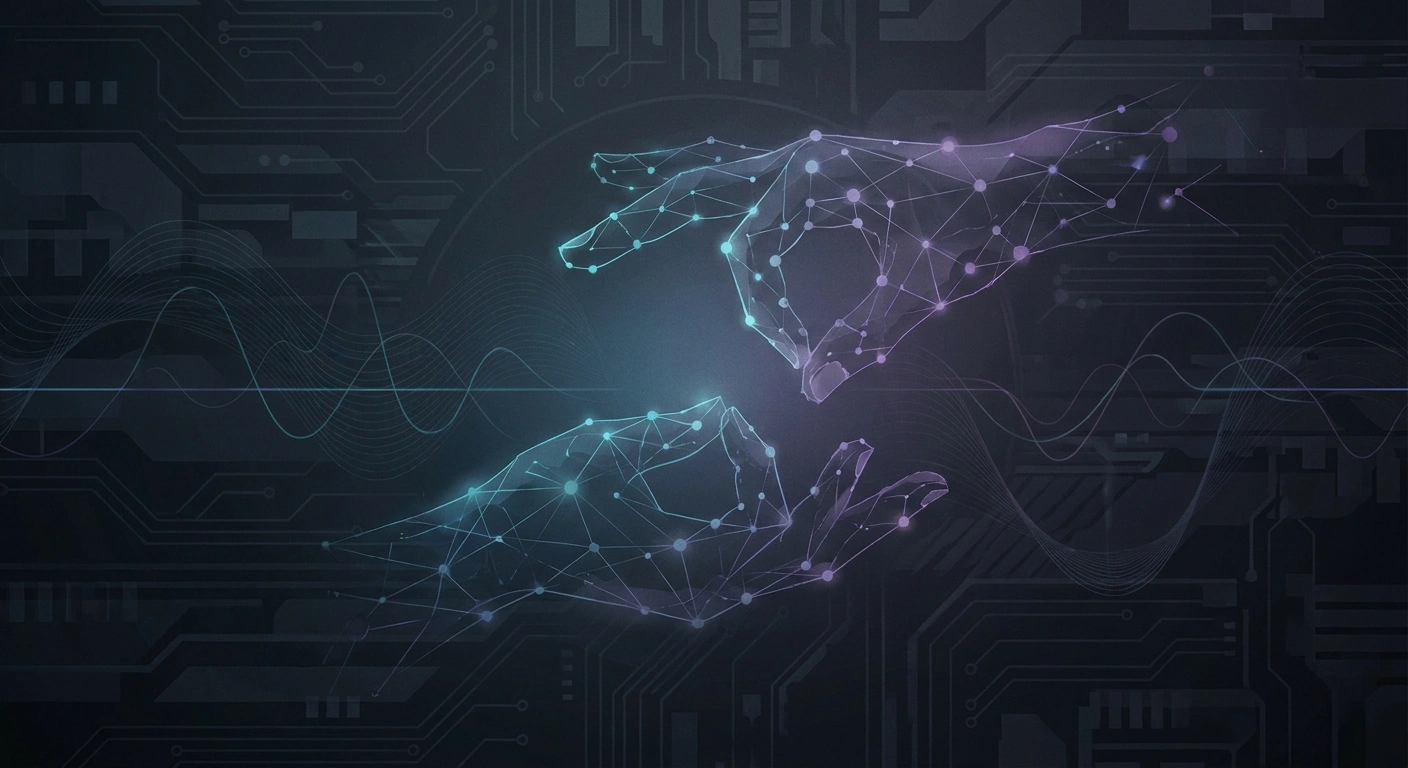
Google DeepMind has unveiled a set of tools designed to put sign language recognition AI directly into the hands of users, marking a significant step in applying computer vision and gesture-understanding models to real-world accessibility. The initiative combines real-time video processing, pose estimation, and on-device inference to translate sign language into text — a technically demanding problem that sits squarely at the intersection of AI video analysis and human communication.
Why Sign Language Is Hard for AI
Unlike text or speech, sign language conveys meaning through a rich combination of hand shapes, movement trajectories, facial expressions, and body posture — often simultaneously. Capturing and interpreting this multi-modal, spatiotemporal signal requires models that can track fine-grained motion across video frames while accounting for variation in signing style, camera angle, and lighting. This makes it one of the more challenging problems in applied computer vision, closer in complexity to full-body motion analysis than to static image classification.
DeepMind's approach leans on pose estimation pipelines that extract skeletal keypoints from live video, feeding these representations into sequence models trained to map gesture sequences onto linguistic tokens. By abstracting raw pixels into structured keypoint data, the system reduces the computational load and improves robustness across different users and environments — a technique that has broad implications for any application relying on human motion capture, from animation to synthetic avatar generation.
On-Device Inference and Privacy
A central design choice is running these models on-device rather than in the cloud. This delivers the low latency required for genuinely real-time translation while keeping sensitive video of a user's face and gestures private. On-device deployment demands aggressive model optimization — quantization, distillation, and efficient architectures — to fit within the memory and compute constraints of consumer hardware. The engineering trade-offs here mirror those seen across the broader push to move generative and analytical AI closer to the edge, where privacy and responsiveness are paramount.
For the digital authenticity and synthetic media community, the technical machinery behind this release is notable. The same pose-estimation and gesture-tracking systems that translate sign language into text can, in reverse, drive the generation of realistic signing avatars — synthetic humans that produce sign language from text input. This bidirectional capability underscores how closely gesture recognition and gesture synthesis are linked, and how advances in one domain accelerate the other.
Building With, Not Just For, the Community
DeepMind emphasizes that the tools were developed in collaboration with Deaf and hard-of-hearing communities, a critical factor given how frequently accessibility AI has failed by training on unrepresentative data. Sign languages are not universal — they vary by region and country, each with distinct grammar and vocabulary — so any robust system must be trained on diverse, community-sourced datasets. Getting this data collection and validation right is as much a technical challenge as it is an ethical one, directly affecting model accuracy and fairness.
By releasing these capabilities as usable tools rather than research demos, DeepMind is signaling a shift from benchmark-driven publications toward deployable products. This lowers the barrier for developers to integrate sign language recognition into apps, video conferencing tools, and communication platforms.
Implications for AI Video and Synthetic Media
The techniques on display — real-time keypoint tracking, temporal sequence modeling, and efficient on-device video inference — are foundational to the wider AI video ecosystem. As synthetic avatars and digital humans become more common in media, gaming, and virtual communication, the fidelity of gesture and expression modeling becomes a key differentiator. A system capable of accurately reading nuanced hand and facial movements is, by extension, a system capable of rendering them convincingly.
This dual-use nature raises familiar questions about authenticity. As gesture-synthesis quality improves, distinguishing a genuine signer from an AI-generated avatar could become another frontier in the deepfake detection landscape. For now, DeepMind's release is a clear win for accessibility and a demonstration of how far real-time video AI has matured — running responsibly and privately on everyday devices.
Stay informed on AI video and digital authenticity. Follow Skrew AI News.