Deepfake X-Rays Fool Radiologists and AI Detectors
A new study reveals that AI-generated fake X-rays can deceive both experienced radiologists and automated detection systems, raising urgent concerns about synthetic media threats in healthcare.
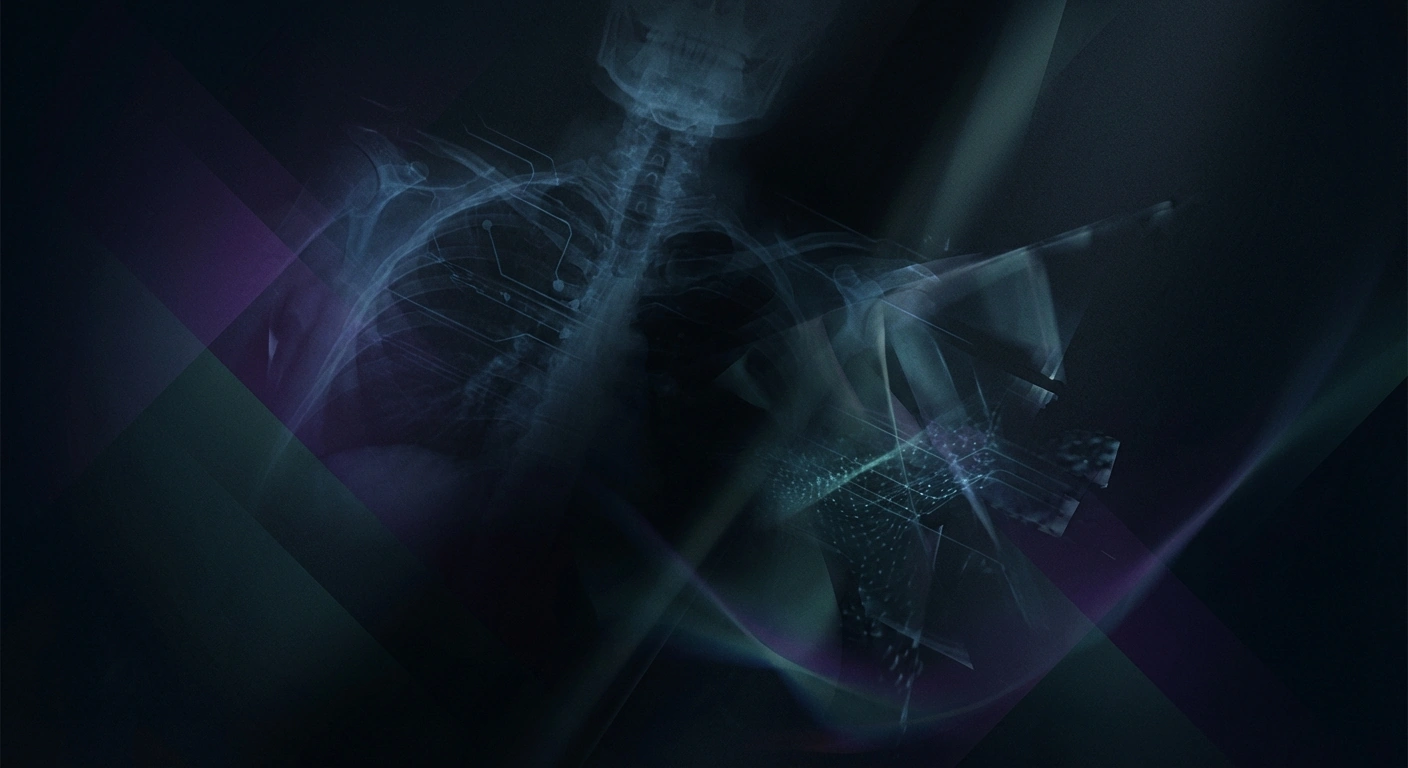
A new study has found that deepfake X-ray images generated by artificial intelligence can successfully deceive both experienced radiologists and AI-based detection systems, raising significant concerns about the integrity of medical imaging and the broader implications of synthetic media in high-stakes environments.
Synthetic Medical Images: A New Frontier for Deepfakes
While deepfake technology has been most prominently associated with face swapping in video and audio voice cloning, the threat landscape is expanding rapidly into domains where the consequences of manipulation can be far more severe. Medical imaging represents one such critical domain, where the ability to generate convincing fake X-rays could have devastating implications — from insurance fraud and falsified medical records to manipulated clinical trial data and even potential threats to patient safety.
The study examined the capacity of generative AI models to produce synthetic radiological images that are virtually indistinguishable from authentic X-rays. Researchers tested these deepfake images against two lines of defense: human expert review by trained radiologists and automated AI detection algorithms designed to identify synthetic content. The results were troubling on both fronts.
Radiologists Struggle to Identify Fakes
Experienced radiologists, who spend years training to identify subtle anomalies in medical images, demonstrated significant difficulty distinguishing AI-generated X-rays from genuine patient scans. This finding underscores a fundamental challenge in deepfake detection: when generative models are trained on domain-specific datasets — in this case, large repositories of medical imaging data — the resulting synthetic outputs can capture the statistical patterns, textures, and structural features that experts rely on for authentication.
The inability of human experts to reliably spot fakes mirrors challenges seen in other deepfake domains. Just as viewers struggle to identify AI-generated faces that have been trained on high-quality portrait datasets, radiologists face a similar perceptual barrier when confronted with synthetic images that faithfully reproduce the visual characteristics of legitimate X-rays.
AI Detection Systems Also Fall Short
Perhaps more concerning is that automated detection systems — the kind of AI-versus-AI defense that many in the digital authenticity community view as the most scalable solution to deepfake threats — also struggled with the deepfake X-rays. Current detection methods, which often rely on identifying artifacts, inconsistencies in frequency-domain analysis, or learned features that distinguish real from generated content, proved insufficient against the medical deepfakes evaluated in the study.
This finding highlights a recurring theme in the deepfake detection arms race: detection methods trained in one domain do not necessarily transfer to another. Most state-of-the-art deepfake detectors have been optimized for facial imagery and video content. Medical imaging presents a fundamentally different distribution of visual features, meaning generic detection approaches may miss the subtle signatures of synthetic generation in radiological data.
Implications for Healthcare Security and Beyond
The healthcare sector has been slower than entertainment and social media to confront the deepfake threat, but this study serves as a wake-up call. Potential attack vectors include:
Insurance and billing fraud: Fabricated imaging studies could be submitted to justify unnecessary procedures or inflate claims. Clinical trial manipulation: Synthetic imaging data could corrupt research outcomes, potentially influencing drug approvals or treatment protocols. Medical identity fraud: Fake diagnostic images could be inserted into patient records with harmful consequences for treatment decisions.
The Detection Challenge Continues
The study reinforces the need for domain-specific deepfake detection approaches. Rather than relying on general-purpose synthetic media detectors, healthcare institutions may need specialized tools trained explicitly on medical imaging datasets, incorporating knowledge of imaging physics, scanner-specific artifacts, and anatomical consistency checks that go beyond pixel-level analysis.
Additionally, the findings bolster the case for content provenance and authentication frameworks — such as C2PA (Coalition for Content Provenance and Authenticity) standards — to be extended into medical imaging workflows. Cryptographic signing of images at the point of capture, combined with chain-of-custody verification, could provide a more robust defense than post-hoc detection alone.
As generative AI capabilities continue to advance, the deepfake challenge is clearly not limited to social media videos and celebrity face swaps. The infiltration of synthetic media into medical imaging demonstrates that every visual domain is now a potential target — and detection infrastructure must evolve accordingly.
Stay informed on AI video and digital authenticity. Follow Skrew AI News.