Deepfake Borrowers Threaten Automated Bank Lending
Banks racing toward fully automated lending are now confronting AI-generated synthetic borrowers—deepfaked faces, voices, and documents—that can pass identity checks and secure loans, forcing a rethink of digital authenticity defenses.
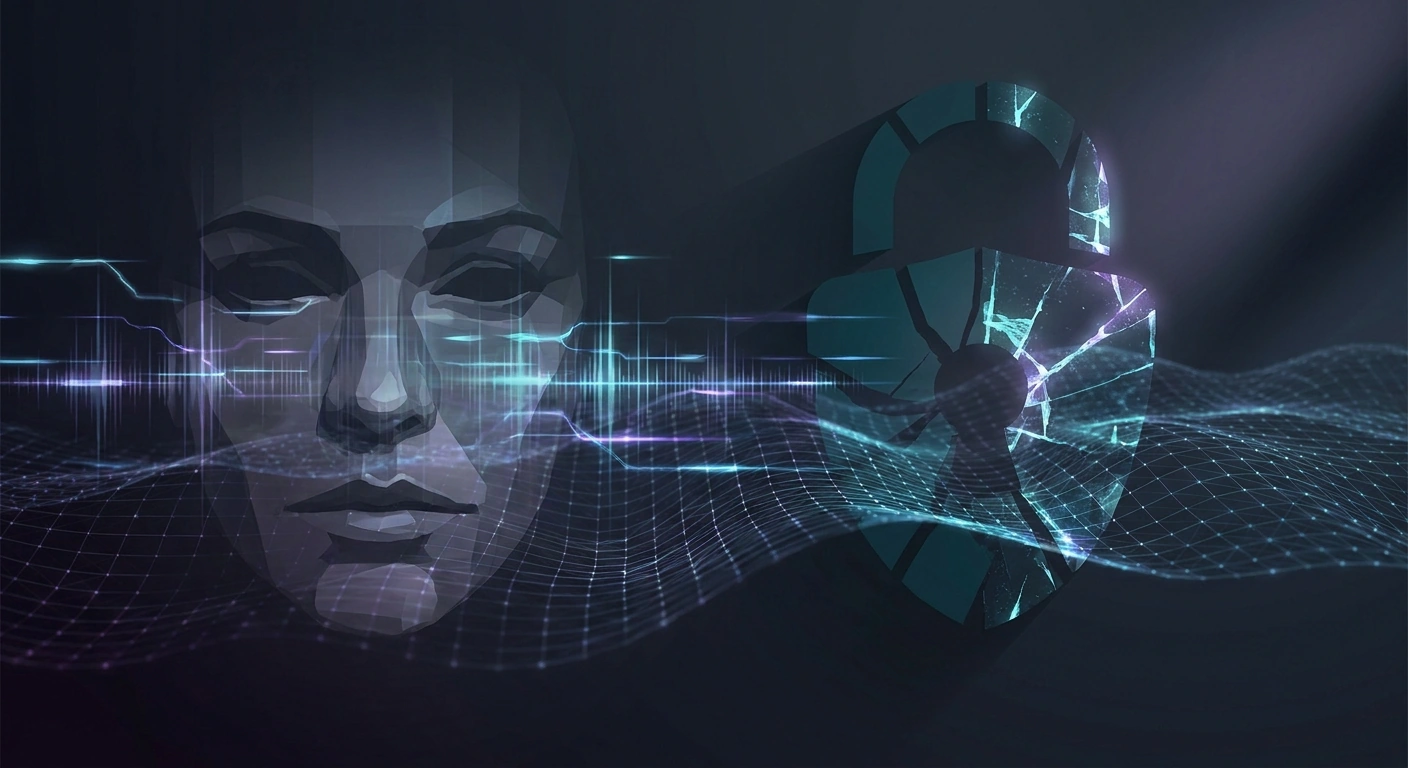
The financial sector's rush toward fully automated, instant lending has collided with one of the most pressing threats in synthetic media: AI-generated borrowers. As banks digitize loan origination from end to end, fraudsters are increasingly deploying deepfaked faces, cloned voices, and synthetic documents to impersonate legitimate applicants—or to manufacture entirely fictional ones—in order to extract loans that will never be repaid.
The problem strikes at the heart of digital authenticity. Automated lending pipelines were designed for speed and scale, replacing in-person verification and manual underwriting with algorithmic decisioning, document scanning, and remote identity proofing. But the same automation that lets a borrower secure a loan in minutes also removes the human friction that once caught impostors. When the only checkpoints are a selfie, a liveness check, and uploaded ID documents, generative AI tools can now defeat each layer.
How Synthetic Borrowers Slip Through
Modern fraud schemes exploit several distinct AI capabilities. The first is face-swap and synthetic face generation, used to defeat the selfie-and-ID matching step common in Know Your Customer (KYC) onboarding. Off-the-shelf face-swapping models can map a fabricated or stolen face onto a live video stream, while diffusion-based generators can produce photorealistic faces of people who do not exist—useful for building "synthetic identities" that combine real and fake data points.
The second is liveness-detection bypass. Many remote onboarding systems ask users to blink, turn their head, or speak a phrase to prove they are a live human rather than a static photo. Injection attacks—where a deepfake video feed is piped directly into the verification app, bypassing the device camera entirely—have become a favored technique. Combined with real-time face animation, attackers can satisfy motion-based liveness prompts convincingly.
The third vector is voice cloning. Where lenders use phone-based verification or voice biometrics, a few seconds of sampled audio can now be enough to synthesize a convincing clone capable of answering security questions or authorizing transactions.
Why Lending Is an Especially Attractive Target
Unlike account takeover, which requires breaching an existing relationship, synthetic-identity loan fraud creates value from nothing. A fraudster nurtures a fabricated identity over time—building thin credit files, opening small accounts, establishing a payment history—before "busting out" with a large loan that defaults. AI accelerates every stage: generating consistent biometric artifacts, fabricating supporting documents such as pay stubs and bank statements, and even producing deepfaked video calls for any human-in-the-loop review steps.
Because the loan is fully automated, the fraud can be executed at scale. A single actor armed with generative tools can submit hundreds of applications, each backed by a different synthetic face and voice, in the time it once took to process one manually.
The Detection Arms Race
Banks are responding by layering authenticity defenses that move beyond simple image matching. Emerging countermeasures include deepfake-detection models that analyze micro-textures, frequency-domain artifacts, and physiological inconsistencies (such as unnatural blinking, lighting mismatches, or absent blood-flow signals in skin). Device and signal-level defenses—detecting whether a camera feed has been virtually injected rather than captured live—are becoming critical for stopping injection attacks that visual detection alone cannot catch.
On the document side, lenders are deploying forensic analysis that checks metadata, compression patterns, and pixel-level tampering signatures. Behavioral biometrics—how a user types, moves a mouse, or interacts with a screen—add another authentication layer that synthetic media cannot easily replicate. Provenance approaches such as content credentials and cryptographic signing of captured media are also gaining attention as a longer-term answer to the authenticity problem.
Strategic Implications
The episode underscores a broader truth about the generative AI era: any system that relies on a face, a voice, or a document as proof of identity is now operating in an adversarial environment. For financial institutions, the calculus is shifting from "how fast can we automate" to "how do we automate while preserving authenticity guarantees." That is fueling demand for a fast-growing market of deepfake-detection and identity-verification vendors, and pushing the industry toward multi-signal defense strategies rather than any single biometric check.
For the synthetic media field, automated lending is a vivid case study in how generative tools migrate from novelty to weaponized fraud—and how detection technology must evolve in lockstep. The banks that win will treat digital authenticity not as a one-time onboarding gate but as a continuous, layered defense.
Stay informed on AI video and digital authenticity. Follow Skrew AI News.