API Access Enables AI Model Cloning and Safety Bypass
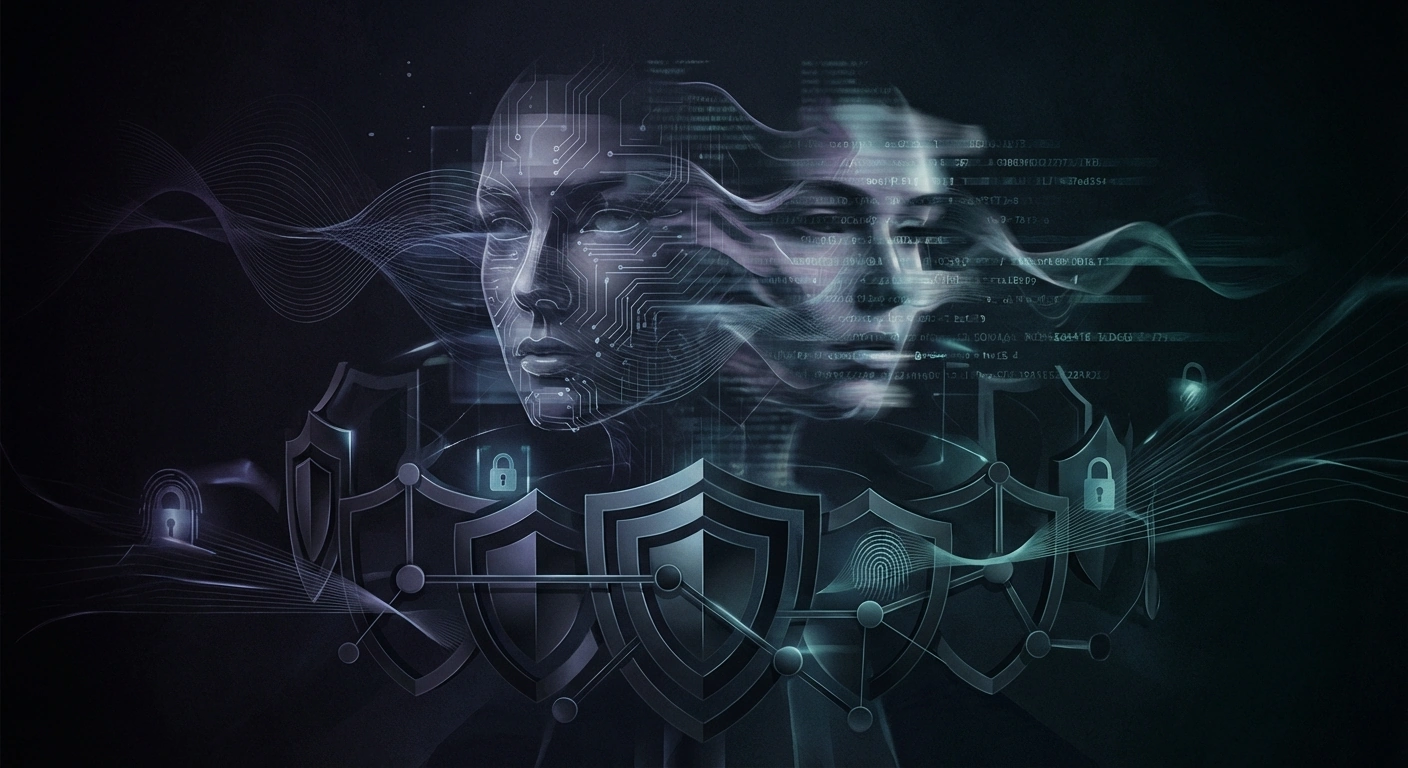
New research reveals how anyone with API access can clone AI models and strip away safety guardrails, creating unregulated copies capable of generating harmful content.
A concerning vulnerability in the AI ecosystem has emerged: anyone with standard API access to large language models can effectively clone these systems and strip away their safety guardrails. This discovery has significant implications for the synthetic media landscape, where unrestricted AI models could be weaponized for deepfake generation and other harmful content creation.
The Model Stealing Problem
The attack vector is deceptively simple. When companies like OpenAI, Anthropic, or Google provide API access to their models, they expose enough information through input-output interactions that determined actors can reconstruct functional copies. This process, known as model distillation or model stealing, doesn't require access to model weights or architecture details—just the ability to query the model and observe its responses.
Researchers have demonstrated that by systematically querying a target model with carefully crafted prompts, attackers can train a smaller "student" model to mimic the behavior of the larger "teacher" model. The resulting clone may not match the original's performance perfectly, but it can capture enough capability to be dangerous—especially when the clone is trained specifically to bypass safety measures.
Stripping Safety Guardrails
Perhaps more alarming than the cloning itself is what happens afterward. Commercial AI models undergo extensive safety training through techniques like Reinforcement Learning from Human Feedback (RLHF) and constitutional AI methods. These guardrails prevent models from generating harmful content, including instructions for illegal activities, hate speech, and—critically for the synthetic media space—assistance with creating non-consensual deepfakes.
However, when a model is cloned through distillation, these safety behaviors aren't necessarily preserved. Attackers can deliberately exclude safety-related training data or fine-tune the cloned model to remove refusal behaviors. The result is an unrestricted version of a capable AI system, ready to assist with tasks the original would refuse.
Implications for Synthetic Media
For the deepfake and synthetic media ecosystem, this vulnerability creates several concerning scenarios:
Unrestricted Image Generation: Models like DALL-E and Midjourney include safeguards against generating non-consensual intimate imagery, celebrity likenesses without permission, and other harmful visual content. Cloned versions could potentially bypass these restrictions.
Voice Cloning Without Consent: Audio synthesis models increasingly include protections against cloning voices without authorization. An unrestricted clone could enable voice-based fraud, impersonation, and harassment at scale.
Video Synthesis Acceleration: As AI video generation advances, safety measures around creating realistic footage of real people become crucial. Unrestricted models could accelerate the creation of political disinformation or revenge content.
Technical Defense Challenges
Defending against model stealing presents significant technical challenges. API providers have experimented with several countermeasures:
Output Perturbation: Adding small amounts of noise to model outputs can theoretically make distillation more difficult. However, this degrades service quality for legitimate users and determined attackers can often filter out the noise with enough queries.
Query Rate Limiting: Restricting the number of API calls makes large-scale data collection more difficult but doesn't prevent patient, well-funded attackers from accumulating sufficient training data over time.
Watermarking: Embedding detectable signatures in model outputs could help identify content generated by stolen models. Research in this area is advancing, but robust watermarking remains an unsolved problem.
Behavioral Detection: Monitoring API usage patterns to identify suspicious query sequences that suggest distillation attempts. This creates an arms race between detection systems and evasion techniques.
The Regulatory Dimension
This vulnerability raises important questions for AI governance. Current discussions around AI safety often assume that controlling model weights and access points provides sufficient security. The reality of API-based model stealing challenges this assumption.
Regulators considering frameworks for synthetic media may need to account for the proliferation of "shadow models"—unauthorized copies operating outside any safety framework. This complicates efforts to hold AI providers accountable for harmful content, as the generating model may be an unrestricted clone rather than the original commercial system.
Looking Forward
The AI security community is actively researching more robust defenses, including cryptographic approaches to API access and advanced behavioral fingerprinting. Meanwhile, the synthetic media detection industry must prepare for a future where harmful content may originate from unrestricted model variants that never underwent safety training.
For organizations building authenticity verification systems, this means detection methods cannot rely on identifying artifacts specific to known commercial models. The next generation of deepfakes may come from shadow models with no recognizable fingerprint.
Stay informed on AI video and digital authenticity. Follow Skrew AI News.