AI Training on Copyrighted Books: The Legal Reality
The legality of training AI models on copyrighted books remains a legal gray zone. Recent court rulings, licensing deals, and fair use battles are reshaping how generative AI companies source their training data.
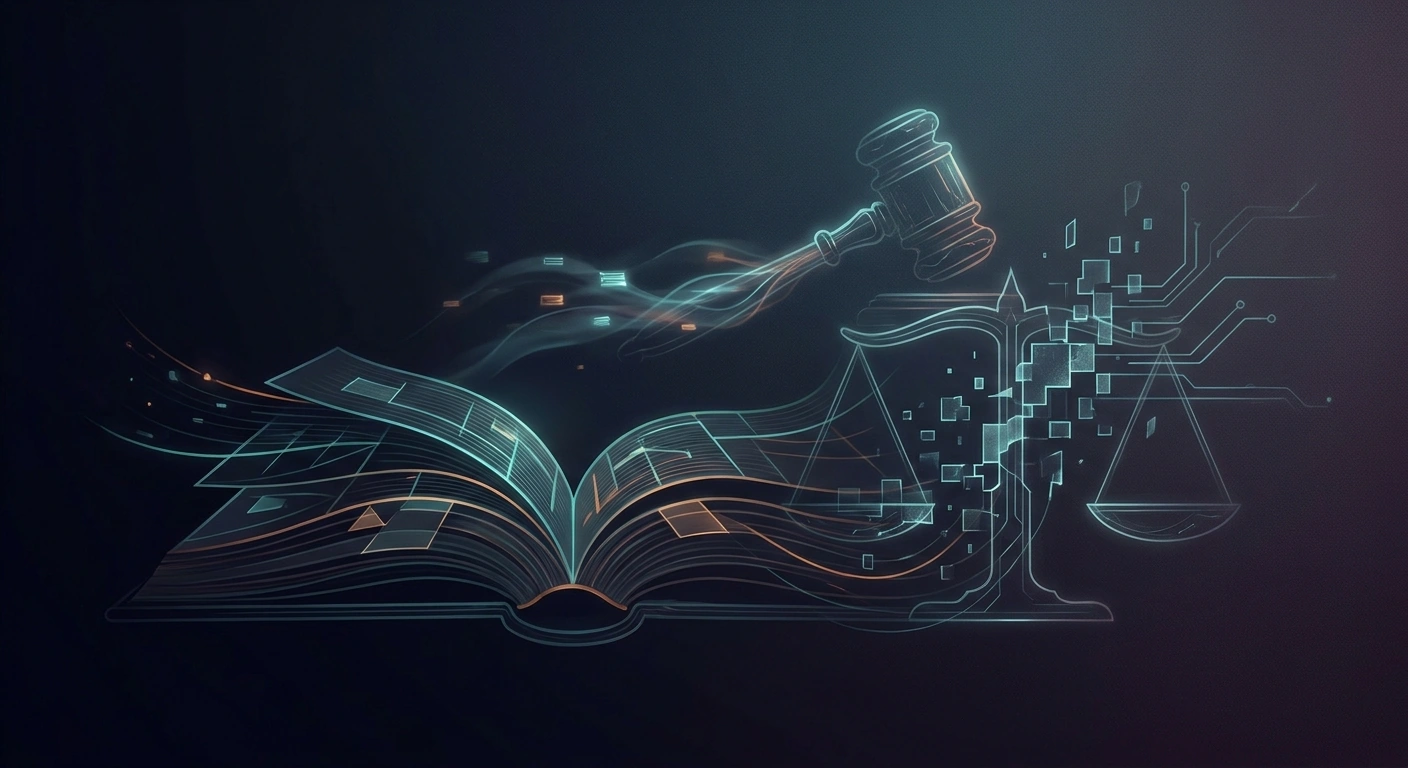
One of the thorniest legal questions in the generative AI era refuses to yield a simple answer: is it legal to train AI models on copyrighted books? The short version is that it's complicated — and the outcome will shape not just large language models, but the entire ecosystem of synthetic media, from AI-generated video scripts to voice cloning and image synthesis.
Why Training Data Is the Battleground
Modern generative models learn by ingesting massive corpora of text, images, audio, and video. For text-based systems, books represent some of the highest-quality training material available: professionally edited, coherent, and rich in stylistic diversity. That quality is precisely why AI developers have been so eager to scrape and license them — and why authors and publishers have fought back.
The legal crux hinges on copyright's "fair use" doctrine in the United States. AI companies argue that training is a transformative use: the model doesn't store or reproduce the books verbatim, but instead learns statistical patterns of language. Rights holders counter that ingesting an entire copyrighted work — even to extract patterns — constitutes unauthorized copying, and that the resulting models compete commercially with the very authors whose work fueled them.
The Courts Are Split
Recent litigation has produced a patchwork of outcomes rather than clear precedent. Some rulings have leaned toward viewing model training as transformative and therefore potentially protected under fair use. Others have zeroed in on how the data was acquired — distinguishing between legally purchased copies and works pulled from pirated "shadow libraries." That distinction matters enormously: a court may accept that training on lawfully obtained books is fair use while simultaneously finding that downloading pirated datasets is infringement, regardless of the downstream use.
This nuance is critical for the broader synthetic media industry. The same legal reasoning applied to books extends naturally to copyrighted images used to train diffusion models, to audio recordings feeding voice-cloning systems, and to video footage powering generative video tools. A precedent set in a book case could ripple across every corner of the AI content landscape.
Licensing Deals as a Hedge
Faced with legal uncertainty, many AI companies have shifted toward striking licensing agreements directly with publishers, media outlets, and content libraries. These deals serve two purposes: they reduce litigation risk, and they signal to regulators and the public that companies are willing to compensate creators. For the synthetic media space, licensing is becoming a competitive differentiator — models trained on cleanly licensed data carry less legal baggage for enterprise customers who can't afford exposure to infringement claims.
This trend also mirrors what's happening in AI video and voice. Companies building voice-cloning and avatar platforms increasingly emphasize consented, licensed training data as both a legal safeguard and a marketing point around digital authenticity. The message to buyers is clear: provenance of training data is now a feature, not an afterthought.
The Global Wrinkle
Fair use is a distinctly American concept. Other jurisdictions handle text and data mining very differently. The European Union, for example, has built specific exceptions for text and data mining, but rights holders can opt out — creating an entirely different compliance calculus for models deployed globally. This fragmentation means an AI company may face a legal green light in one market and a lawsuit in another for the exact same training practice.
Why It Matters for Synthetic Media
For anyone building or deploying generative tools — whether for text, image, audio, or video — the copyright question is no longer academic. The legal outcomes will determine which datasets are safe to use, how much models cost to build (licensing isn't cheap), and which providers can offer enterprises the indemnification they demand.
As detection and authenticity technologies advance in parallel, the industry is converging on a reality where provenance of both training data and generated output becomes central to trust. The unresolved legality of training on copyrighted books is, in many ways, the opening chapter of a much larger story about who owns the raw material of artificial intelligence — and who profits from what it creates.
The answer, for now, remains genuinely complicated. But the direction of travel is toward more licensing, more provenance tracking, and more legal clarity earned the hard way — through the courts.
Stay informed on AI video and digital authenticity. Follow Skrew AI News.