AI Reconstructs What You See From Brain Scans
Researchers have built an AI 'mind-reading' system that reconstructs the images a person is viewing using brain scan data, blending neural decoding with generative models in a striking new frontier for synthetic media.
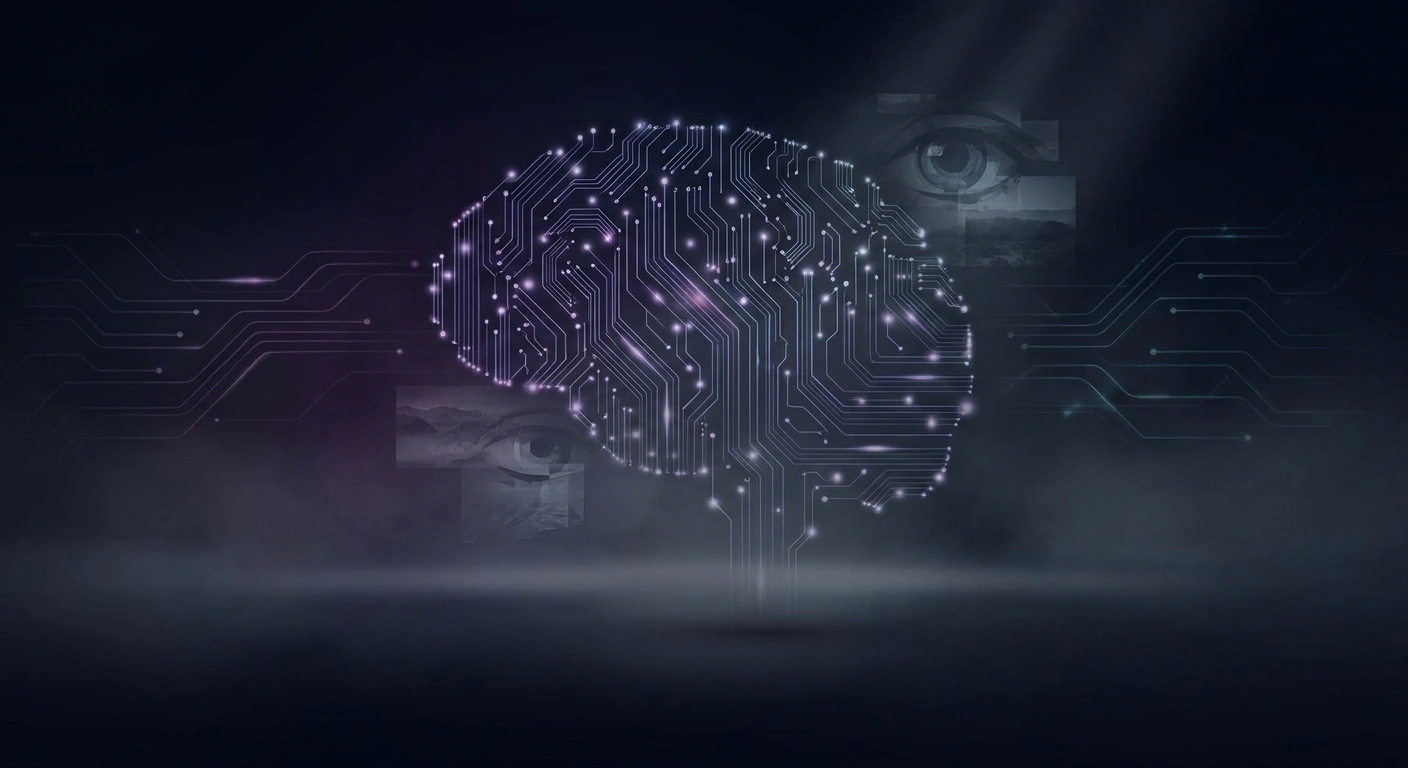
Researchers have unveiled an AI system capable of reconstructing the images a person is looking at by analyzing their brain activity — a development that pushes the boundaries of both neuroscience and generative media. The tool, reported by MIT Technology Review, effectively decodes visual perception from functional brain scans and renders it back into recognizable imagery.
How Neural Decoding Meets Generative AI
At its core, this "mind-reading" system is a pipeline that maps patterns of neural activity — typically captured via functional magnetic resonance imaging (fMRI) — onto the latent space of a generative image model. When a subject views a photograph, their visual cortex produces distinctive activation patterns. A trained decoder learns the statistical relationship between those patterns and the visual features of the stimulus. That decoded representation is then fed into a generative model, which synthesizes an image approximating what the person saw.
This two-stage approach — brain-signal-to-latent-embedding, followed by embedding-to-image reconstruction — mirrors the architecture behind modern text-to-image and image synthesis systems. The generative backbone performs much the same role as it does in diffusion-based tools: filling in plausible detail from a compressed, abstract representation. The difference is that the conditioning signal originates not from text prompts but from the human brain itself.
Why This Matters for Synthetic Media
For an audience focused on synthetic media and digital authenticity, this research is significant for several reasons. First, it demonstrates how far generative models have advanced in their ability to reconstruct coherent, high-fidelity imagery from sparse and noisy inputs. The same generative priors that let diffusion models hallucinate realistic faces and scenes from text are what make neural reconstruction possible. These shared foundations underscore how general-purpose image synthesis has become.
Second, the work raises profound questions about data provenance and consent in the generative era. If neural signals can be decoded into imagery, then brain data becomes a new category of sensitive biometric input — one that could, in principle, be captured, stored, and reconstructed. This extends the authenticity conversation beyond the traditional domains of deepfake video and voice cloning into the territory of "neural privacy."
Technical Limitations and Caveats
It is important to temper the sci-fi framing. These systems do not read arbitrary thoughts. They are trained on specific individuals viewing specific categories of images, and reconstructions tend to capture broad semantic content — the gist of a scene, dominant objects, colors, and layout — rather than pixel-perfect detail. The models rely heavily on their generative priors to produce plausible-looking output, which means reconstructions can be more a reflection of what the model expects than an exact record of what the subject perceived.
This reliance on learned priors is a double-edged sword. It enables convincing reconstructions from limited brain data, but it also means the output is partly synthetic invention. In practical terms, the system interpolates and hallucinates, filling gaps with statistically likely content — the same behavior that makes generative image models powerful and, at times, unreliable. Reconstructions also require expensive, time-consuming fMRI sessions and per-subject training, limiting real-world applicability for now.
The Broader Trajectory
Neural decoding research has accelerated alongside the generative AI boom, and each advance in image synthesis tends to flow directly into these brain-reading pipelines. As generative backbones become more capable, the fidelity of reconstructions improves in lockstep. The convergence suggests a future in which the line between externally generated synthetic media and internally decoded perception becomes increasingly blurred.
For researchers and policymakers, the implications are substantial. Medical applications — such as helping patients with communication disabilities or studying visual cognition — are compelling. But the dual-use nature of the technology demands careful governance. The authenticity and provenance frameworks being developed for AI-generated content may eventually need to account for a new class of synthetic imagery: that reconstructed from human neural activity.
As generative AI continues to expand into unexpected domains, this "mind-reading" breakthrough is a reminder that the same core techniques powering deepfakes and text-to-image tools are reshaping fields far beyond entertainment and media — and that the question of what is real versus synthesized is only growing more complex.
Stay informed on AI video and digital authenticity. Follow Skrew AI News.