AI Deepfake Detection Enters Healthcare Fraud Prevention
New AI-powered deepfake detection tools are being deployed to combat a surge in synthetic medical claims fraud, marking a significant expansion of authentication technology into healthcare.
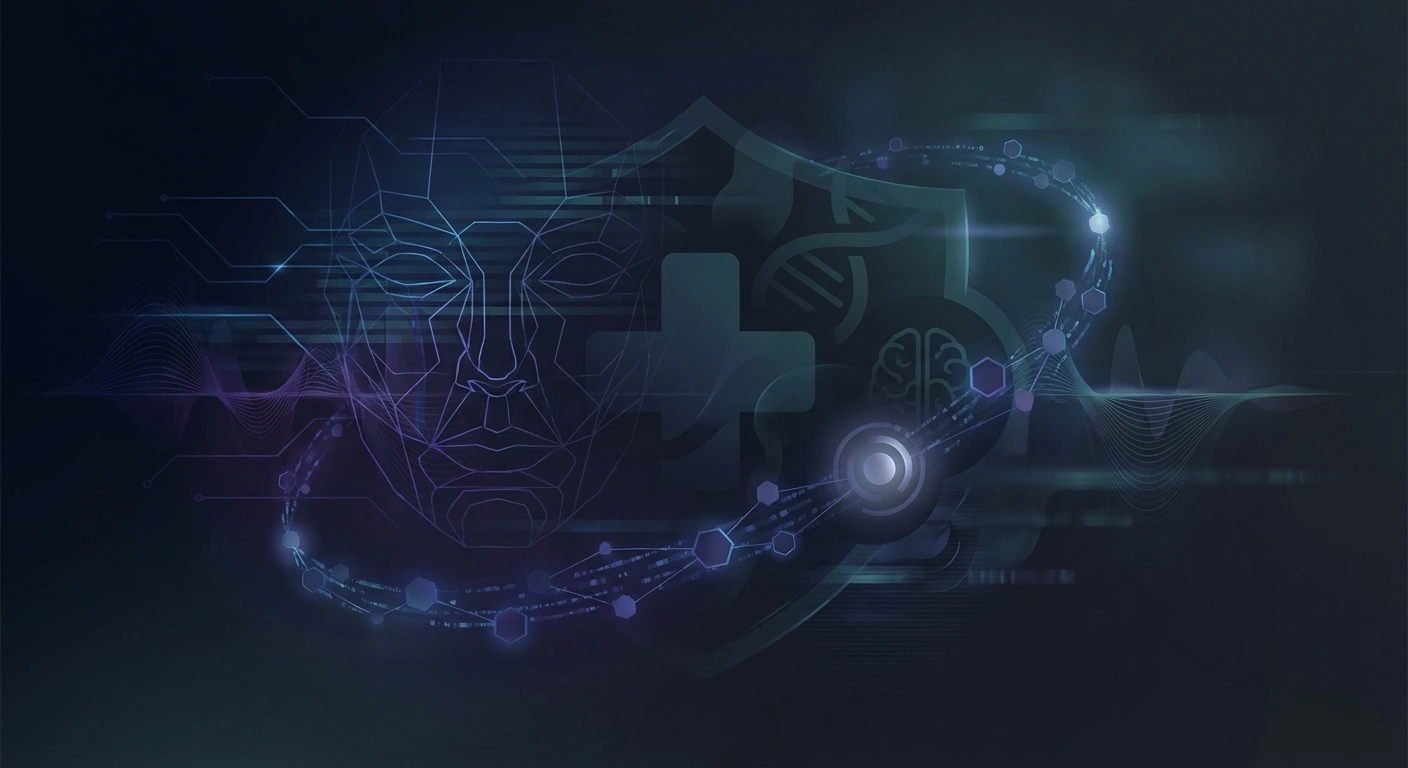
The intersection of deepfake detection technology and healthcare fraud prevention represents a compelling new frontier for AI authentication systems. As synthetic media capabilities become increasingly accessible, fraudsters are leveraging these tools to create fabricated medical documentation, manipulated identity verification materials, and fraudulent claims evidence—prompting the healthcare industry to deploy sophisticated AI detection countermeasures.
The Growing Threat of Synthetic Medical Fraud
Healthcare fraud has long been a multi-billion dollar problem, but the emergence of generative AI and deepfake technology has introduced entirely new attack vectors. Traditional fraud schemes relied on forged documents or identity theft, methods that left detectable paper trails and required significant manual effort to execute at scale. Today's synthetic media tools can generate convincing fake medical records, manipulate diagnostic imagery, and even create deepfake videos for telemedicine identity verification—all with minimal technical expertise required.
The surge in AI-generated synthetic content has created an asymmetric threat landscape. While generating convincing fakes has become trivially easy, detecting them requires increasingly sophisticated technical approaches. This imbalance has driven healthcare insurers and providers to invest heavily in AI-powered detection systems capable of identifying synthetic manipulation across multiple media types.
Technical Approaches to Synthetic Claims Detection
Modern deepfake detection systems deployed in healthcare fraud prevention employ multiple complementary techniques. Artifact analysis examines images and documents for telltale signs of AI generation, including inconsistent lighting, unnatural texture patterns, and compression artifacts that differ from authentic captures. These systems leverage convolutional neural networks trained on extensive datasets of both genuine medical documentation and synthetically generated content.
Metadata forensics provides another crucial detection layer. AI-generated images and documents often contain metadata inconsistencies—mismatched timestamps, impossible device signatures, or missing expected data fields. Machine learning models can rapidly analyze these patterns across thousands of claims, flagging anomalies that would escape human review.
For video-based verification, particularly in telemedicine contexts, detection systems employ temporal analysis to identify frame-by-frame inconsistencies characteristic of deepfake generation. Facial landmark tracking, lip-sync analysis, and physiological signal detection (such as authentic blinking patterns and skin color variations from blood flow) help distinguish real patients from synthetic impersonations.
Implementation Challenges in Healthcare Contexts
Deploying deepfake detection in healthcare environments presents unique technical and regulatory challenges. Medical imagery—X-rays, MRIs, CT scans—has specific characteristics that require specialized training data and detection models. A system optimized for detecting manipulated photographs may fail entirely when analyzing radiological images with their distinct noise patterns and grayscale representations.
Privacy considerations add another layer of complexity. Healthcare data is subject to stringent regulations including HIPAA in the United States, requiring detection systems to operate within strict data handling constraints. Many organizations are exploring federated learning approaches that can improve model performance without centralizing sensitive patient information.
The false positive problem demands particular attention in healthcare fraud detection. Incorrectly flagging legitimate claims as fraudulent can delay critical care and damage patient-provider relationships. Detection systems must be calibrated to maintain extremely high precision while still catching sophisticated synthetic manipulation attempts.
The Arms Race Continues
As detection capabilities advance, so too do generation techniques. The latest generative adversarial networks (GANs) and diffusion models produce synthetic content with fewer detectable artifacts. Some fraud operations have begun using adversarial techniques specifically designed to evade detection systems—adding noise patterns that confuse classifiers or exploiting known weaknesses in deployed models.
This dynamic has driven the development of more robust detection architectures. Ensemble methods combining multiple detection approaches provide resilience against single-point failures. Continuous learning systems that update models based on newly discovered synthetic generation techniques help maintain detection effectiveness as the threat landscape evolves.
Broader Implications for Digital Authenticity
The deployment of deepfake detection in healthcare fraud prevention signals a broader maturation of synthetic media authentication technology. What began as a niche concern in political disinformation and celebrity impersonation has expanded into critical infrastructure protection. Insurance, finance, legal proceedings, and healthcare all now require robust mechanisms for verifying digital content authenticity.
This expansion creates opportunities for technology transfer. Detection techniques refined for medical imaging analysis may prove valuable in other domains requiring specialized image authentication. Similarly, the regulatory frameworks emerging around healthcare AI deployment could inform standards for other industries grappling with synthetic media threats.
As synthetic media capabilities continue advancing, the integration of sophisticated detection systems into fraud prevention workflows will likely become standard practice across industries. Healthcare's current push to address AI-enabled fraud represents both a specific defensive response and a broader indicator of how digital authenticity verification is becoming essential infrastructure for the AI age.
Stay informed on AI video and digital authenticity. Follow Skrew AI News.