AI Agents Can Now Unmask Anonymous Online Accounts
New research reveals AI agents can identify anonymous accounts by analyzing writing patterns, behavioral data, and cross-platform activity, raising major privacy and authenticity concerns.
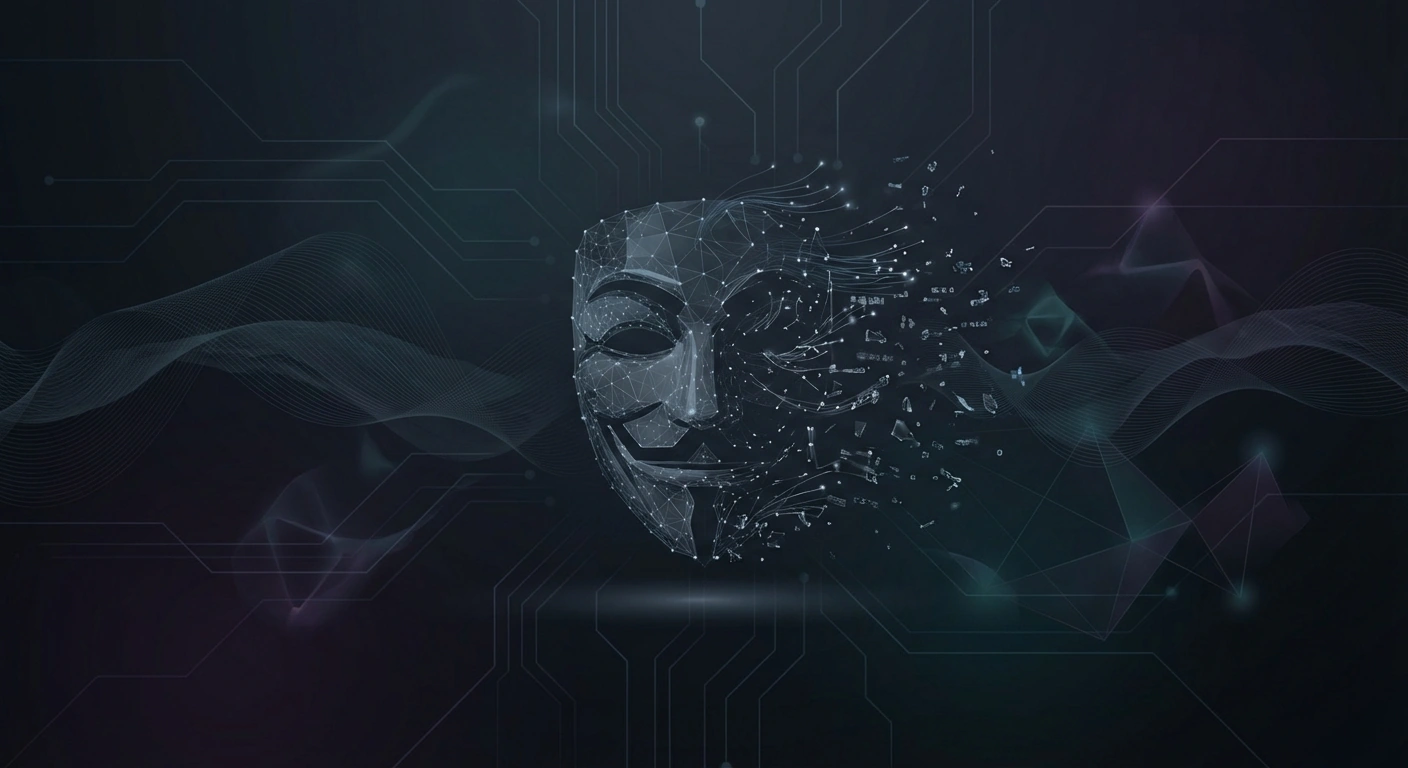
The promise of online anonymity—long considered a cornerstone of internet freedom—faces an unprecedented technological challenge. New research and emerging AI tools demonstrate that artificial intelligence agents can now effectively unmask anonymous online accounts, correlating digital breadcrumbs across platforms to identify real-world individuals with alarming accuracy.
How AI Deanonymization Works
The technical approach behind AI-powered deanonymization leverages multiple data streams that most users don't realize they're leaving behind. At its core, these systems employ stylometric analysis—the computational study of writing style—combined with behavioral pattern recognition and cross-platform activity correlation.
Modern large language models (LLMs) excel at detecting subtle linguistic fingerprints: sentence structure preferences, vocabulary choices, punctuation habits, and even timing patterns in how users engage with content. When an AI agent processes thousands of posts from an anonymous account, it builds a comprehensive linguistic profile that can be matched against known identities elsewhere on the internet.
Beyond writing style, these AI systems analyze behavioral metadata: when users are active, how quickly they respond to certain topics, the networks of accounts they interact with, and the progression of interests over time. Each data point individually reveals little, but in aggregate, they form a unique signature nearly as identifying as a fingerprint.
The Technical Architecture of Identity Correlation
The AI agents performing this analysis typically operate as multi-step reasoning systems. They first embed text and behavioral data into high-dimensional vector spaces where similar patterns cluster together. Using techniques like semantic similarity search and neural network classifiers, these systems can compare an anonymous account's digital footprint against vast databases of known identities.
What makes modern approaches particularly powerful is their ability to handle adversarial obfuscation. Even users who deliberately alter their writing style or posting patterns leave detectable traces. AI models trained on millions of examples learn to see through surface-level disguises, identifying deeper structural patterns that users unconsciously maintain.
Cross-platform correlation amplifies these capabilities dramatically. An AI agent can simultaneously analyze activity on Reddit, X (formerly Twitter), forums, and comment sections, building a unified identity graph that connects seemingly unrelated accounts. The graph neural network approaches now being deployed can identify probable identity matches even when direct content overlap is minimal.
Implications for Digital Authenticity
This technological development cuts both ways for the digital authenticity space. On one hand, it represents a powerful tool for detecting synthetic identities—the AI-generated personas and bot networks that pollute online discourse. If AI can identify real humans behind anonymous accounts, it can also potentially flag accounts that lack the coherent behavioral signatures of genuine users.
However, the same technology poses significant risks for legitimate anonymous speech. Whistleblowers, activists in authoritarian regimes, and individuals escaping harassment all rely on anonymity protections that AI deanonymization could compromise. The asymmetry is troubling: sophisticated actors may employ counter-measures, while ordinary users remain vulnerable.
The Arms Race Between Privacy and Detection
The emergence of AI deanonymization tools is sparking a new technological arms race. Privacy-focused researchers are developing style transfer techniques that can automatically rewrite text to remove identifying patterns. Some tools inject deliberate noise into behavioral patterns, creating false signals that confuse correlation algorithms.
Yet AI detection systems continuously improve. Each new obfuscation technique becomes training data for the next generation of deanonymization models. This cat-and-mouse dynamic mirrors the deepfake arms race, where generation and detection technologies push each other forward in an escalating cycle.
Regulatory and Ethical Dimensions
The legal landscape around AI deanonymization remains largely undefined. While existing privacy regulations like GDPR address data collection, they weren't designed for AI systems that can infer identity from publicly available information. The technical capability to unmask anonymous users doesn't necessarily confer the legal right to do so, but enforcement mechanisms lag far behind the technology.
For platforms and researchers working in digital authenticity, this development demands careful ethical consideration. Tools designed to detect synthetic media or verify content authenticity could potentially be repurposed for surveillance. Building appropriate safeguards and use-case restrictions into these systems becomes essential.
Looking Ahead
As AI agents grow more capable, the fundamental assumptions underlying online anonymity will require reassessment. The technical reality is that maintaining genuine anonymity against determined AI analysis may become practically impossible for most users. This shift has profound implications for how we design platforms, regulate AI capabilities, and protect legitimate anonymous speech in an era where artificial intelligence can connect the dots faster than ever before.
For the digital authenticity community, these developments underscore a critical truth: the same AI capabilities that enable deepfake detection and content verification can also threaten privacy. Navigating this tension thoughtfully will define the next chapter of AI governance.
Stay informed on AI video and digital authenticity. Follow Skrew AI News.